The Rollback: What the R&A and USGA Announced in December 2023
The revised testing standard for conforming balls, effective for elite play from January 2028 and the wider game from 2030, is the most significant equipment change since grooves. The piece covers the announcement, the phased timeline, and what a shorter ball does to a game played on ground that has always been meant to run.
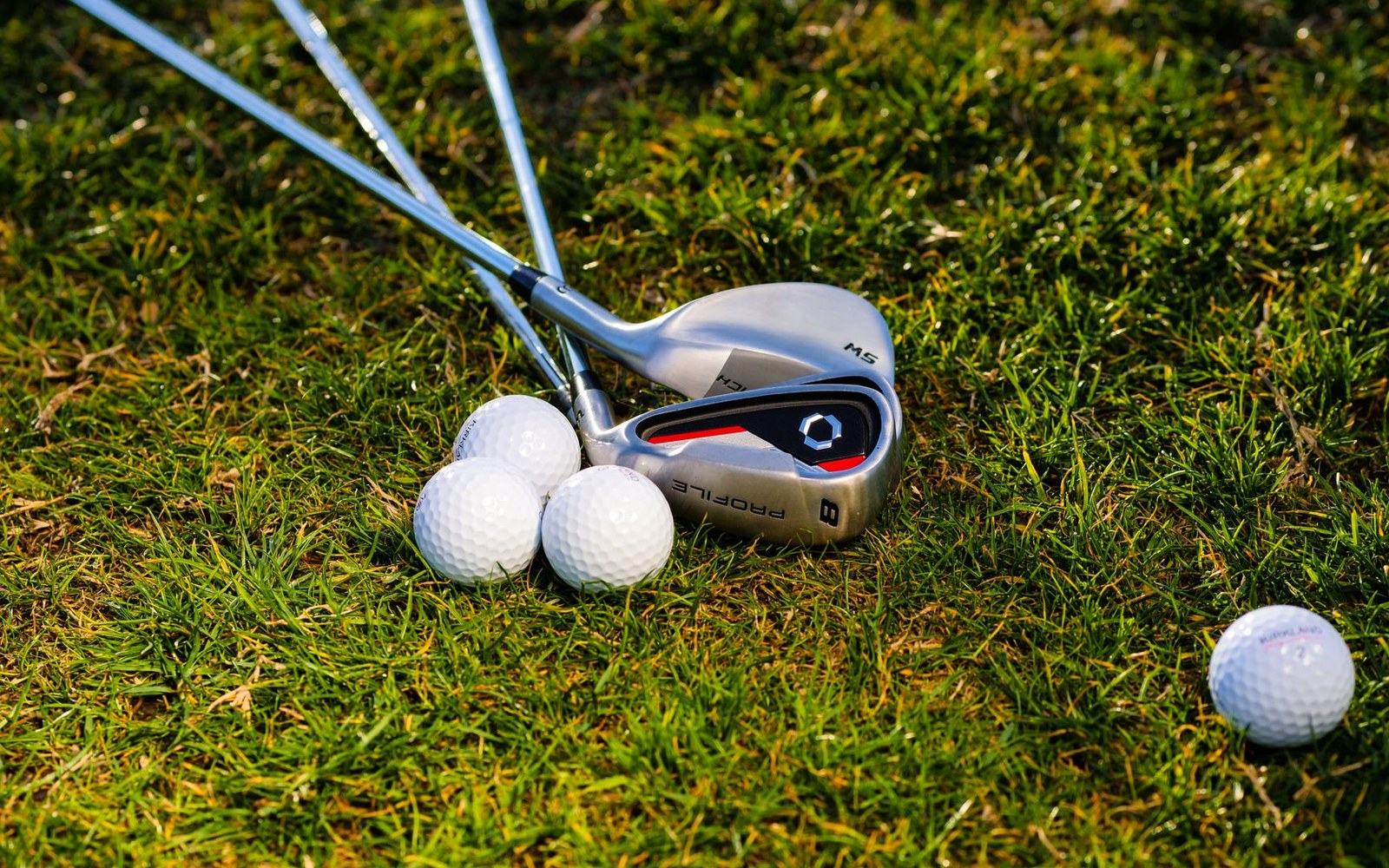
A revised testing standard, phased from January 2028.
Photo: Kindel Media / Pexels
The most consequential equipment ruling since grooves will arrive in two phases — and its implications for links golf run deeper than distance.
The Announcement and What It Changes
In December 2023, the R&A and USGA jointly published a revised Overall Distance Standard testing protocol for conforming balls, establishing a reduced performance ceiling for conforming golf balls. Under the new standard, elite competition golf — professional tours and high-level amateur events — must comply from 1 January 2028. The wider game follows from 1 January 2030. Any ball manufactured after those dates that exceeds the revised distance threshold will not conform under the Rules of Golf.
The mechanism is the Overall Distance Standard test, which the governing bodies conduct at their respective facilities. Under the current standard, a conforming ball may travel up to 317 yards in total distance under controlled laboratory conditions. The revised standard brings that ceiling down by approximately 15 yards, a reduction that translates, depending on conditions and player speed, to somewhere between 10 and 25 yards of real carry loss at the professional level. Recreational golfers, who rarely approach the test ceiling, will see far smaller changes, if they notice any at all.

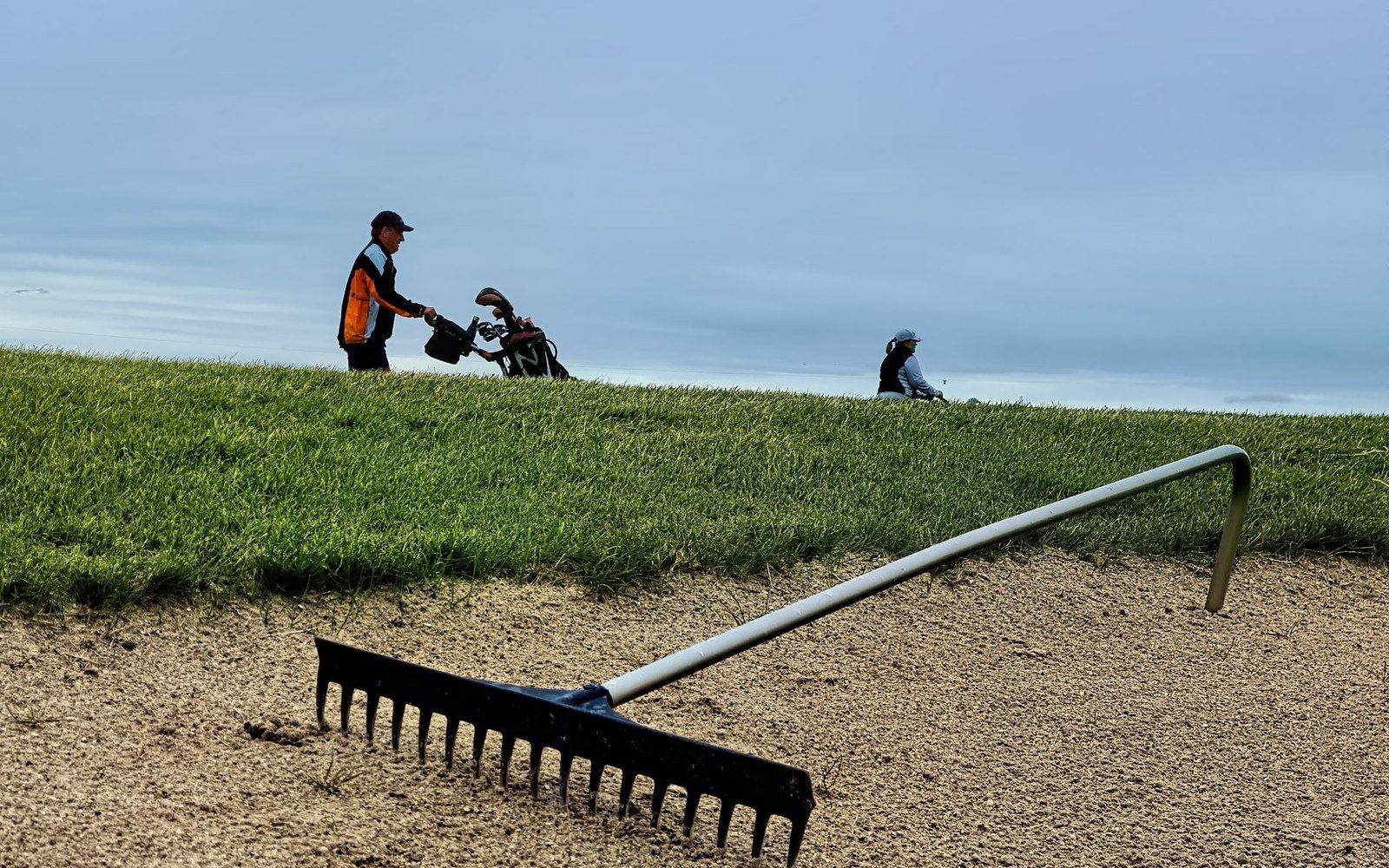
The published record behind the decision. Turf cut, stacked and pinned by hand: a bunker face is rebuilt rather than repaired.
Photo: Kindel Media / Pexels · Photo: Martin Magnemyr / Pexels
The announcement had been anticipated since the governing bodies released the Distance Insights report in 2020 documenting a long-term trend: average driving distance on the major professional tours has increased by roughly 25 yards since 2003, compressing the strategic architecture of courses designed in an earlier era. The report drew on more than two decades of data and formed the evidential foundation for the December ruling.
What a Shorter Ball Does on Links Ground
The distance argument is usually framed around yardage and course length — whether a modern professional can overpower a design. On parkland, that framing is largely correct. On links ground, it misses something.
Links golf is built on the premise that the ground itself participates in the game. Firm, fast fescue turf, the prevailing wind off the Atlantic, and the convex and hollow landforms of wind-blown sand dunes combine to make ground-running shots not a consolation for lost distance but a legitimate and often preferred line of play. At Ballybunion, at Royal County Down, at Lahinch, the ground routing conceived by architects working before the modern ball existed was calculated with running approaches in mind. A ball that stops shorter in the air and spins less on landing is, on most links holes, a ball better suited to the surface it lands on.
There is a subtler point. The current high-performance ball, optimised for maximum carry and reduced spin, is in some respects the least adapted piece of equipment for links conditions. Wind resistance, wet sand, and uneven bounce all penalise aerial carry more severely than a flatter, faster trajectory managed with less spin. The rollback does not restore the gutty or the wound ball, but it nudges the conforming ball's flight characteristics in a direction that links designers would have understood as natural. Whether manufacturers can produce a ball that meets both the reduced distance ceiling and golfers' expectations for performance in wet, cold Atlantic conditions is an engineering challenge that has not yet been resolved.
The Timeline and What It Means for Competition
For the professional circuits, 2028 is close. The DP World Tour, which rotates the Irish Open across several links venues, will be operating under the new standard in time for what would ordinarily be a mid-decade scheduling cycle. The Open Championship, which returned to Royal Portrush in 2019 and is scheduled to do so again in 2025, will also be played under the revised standard before the decade ends. How those courses play — holes that have recently been stretched at significant architectural cost, in some cases into previously unplayed dune ground — will depend partly on how far the ball actually moves under real playing conditions, rather than laboratory ones.
The governing bodies have built the two-year lag between elite and recreational adoption deliberately: it allows equipment manufacturers to retool, and it gives amateur golfers and national associations time to understand a change that is, for most club-level players, more psychological than material.