Ballybunion Old: Ground Nobody Would Be Permitted to Build on Now
The Old Course runs out along the Shannon estuary cliffs on routing land that pre-dates any planning regime. The piece covers the club's own architectural record, the cliff-stabilisation works carried out since the 1990s, and why the routing has changed less than the coastline has.
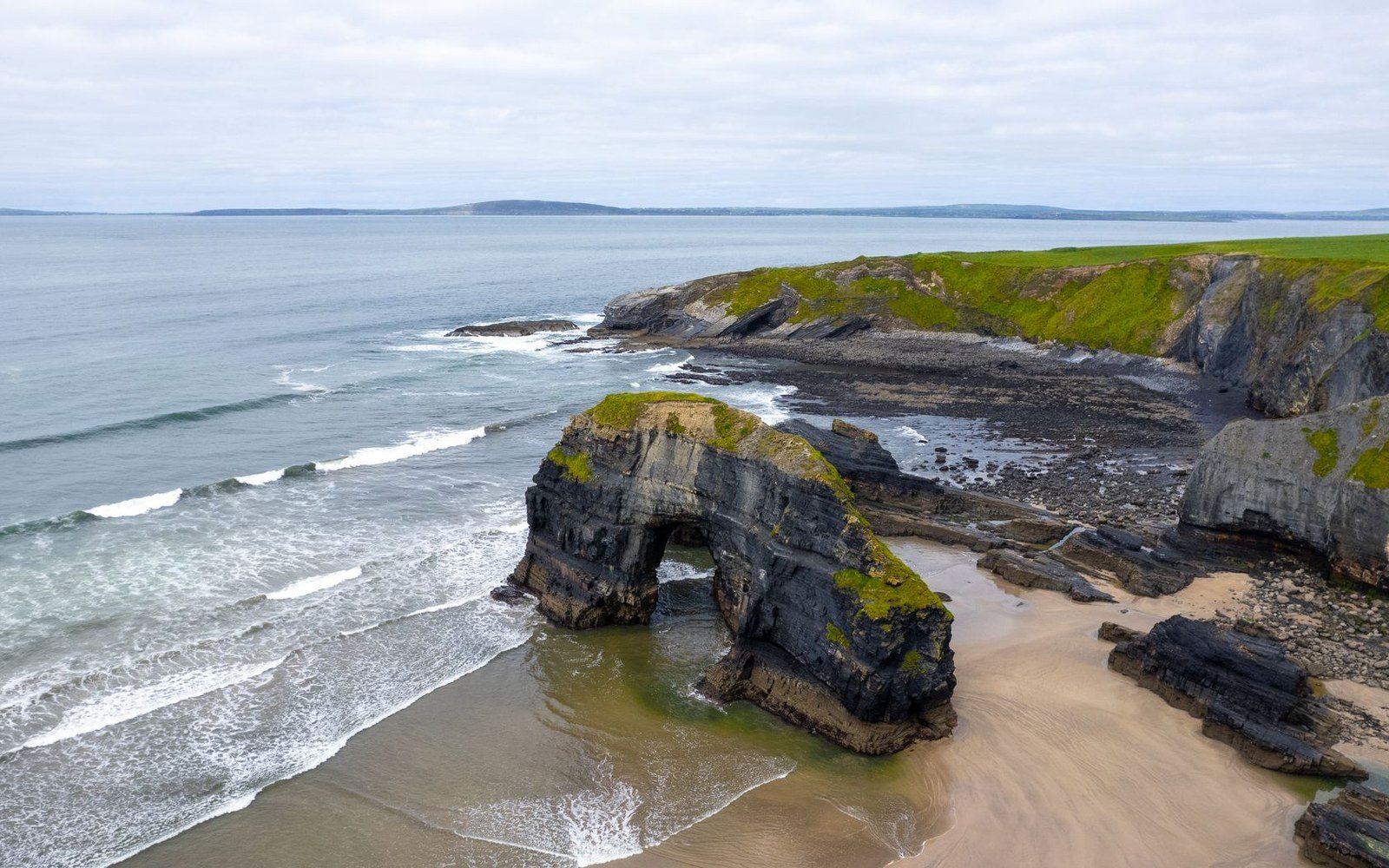
Ground nobody would be permitted to build on now.
Photo: Léonard Dinichert / Pexels
The Old Course runs along cliffs above the Shannon estuary on land that predates any planning regime — and the routing has changed less than the coastline beneath it.
What the Ground Actually Is
Ballybunion sits at the mouth of the Shannon estuary on the north Kerry coast, where the Atlantic meets a coastline of sandy cliffs and dune ridges that have been in motion for centuries. The Old Course was first laid out in 1893, revised substantially over the following decades, and routed across ground that a modern planning authority would not touch: cliff edges, unstable dune faces, and tidal margins where the boundary between golf course and sea is measured in metres rather than kilometres. No environmental impact assessment, no coastal zone management plan, no foreshore licence review existed to complicate matters. The course was built because the land was there and the game was spreading.
That sequence of events is irreversible. Ballybunion Old now occupies a site whose ecological and geomorphological sensitivity would block a greenfield application outright. The cliffs along the estuary side — particularly around the 7th, 8th, and 11th holes — are composed of glacially deposited sandy till capped by thin dune soils, and they face a fetch of wind and wave energy that Geological Survey Ireland has documented as one of the more energetic coastal environments on the Irish Atlantic margin. The course does not sit beside this exposure; it sits on top of it.
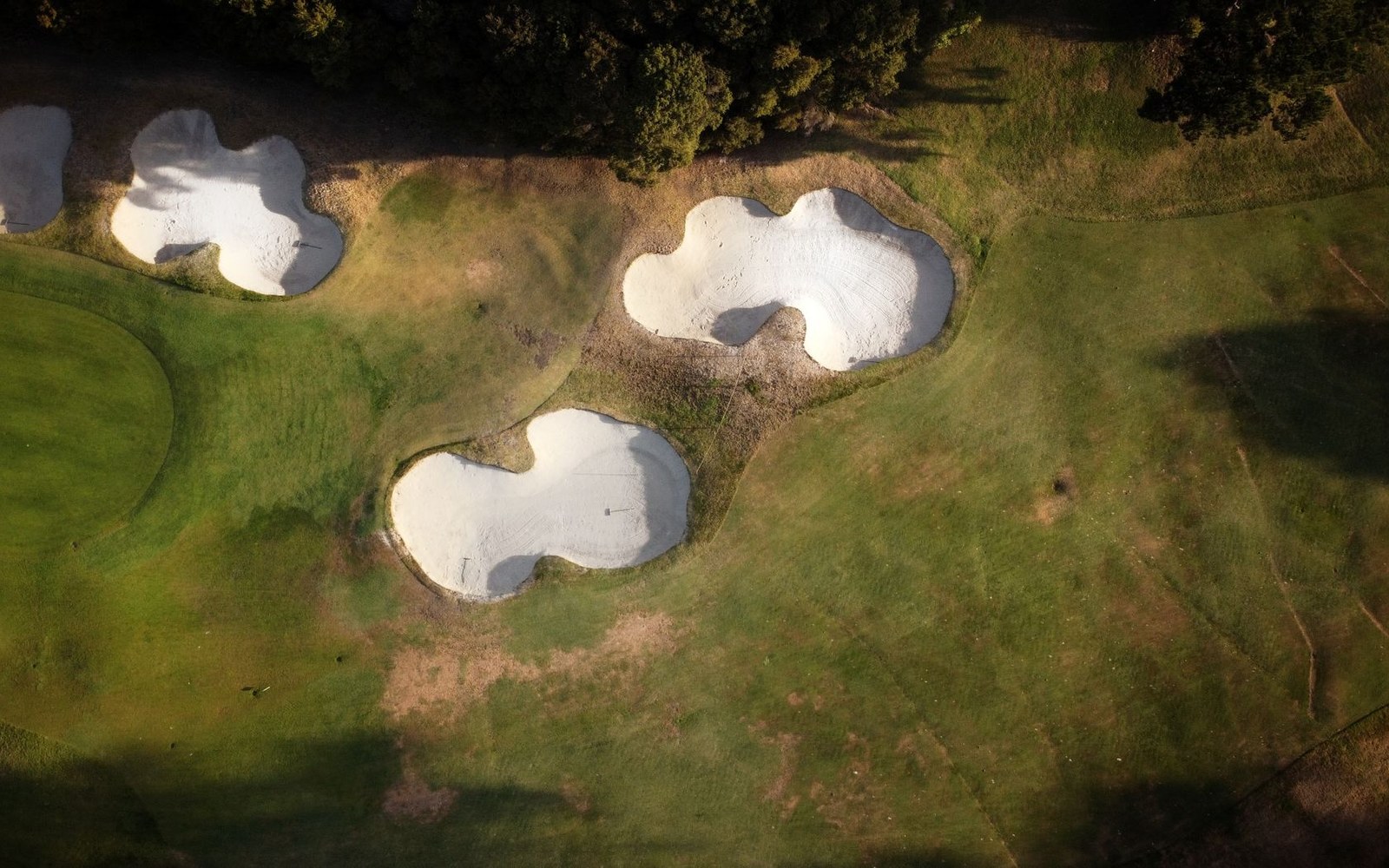
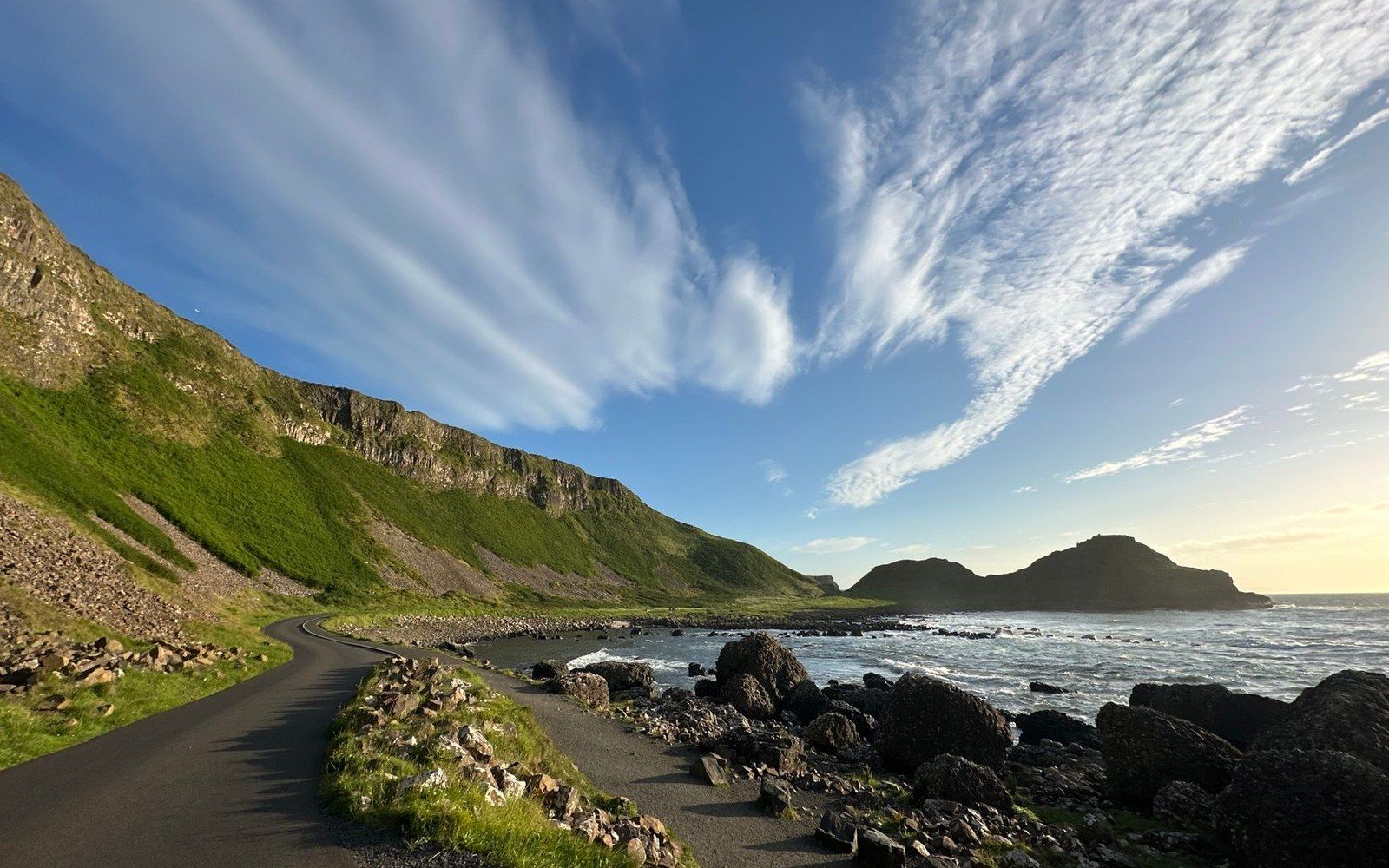
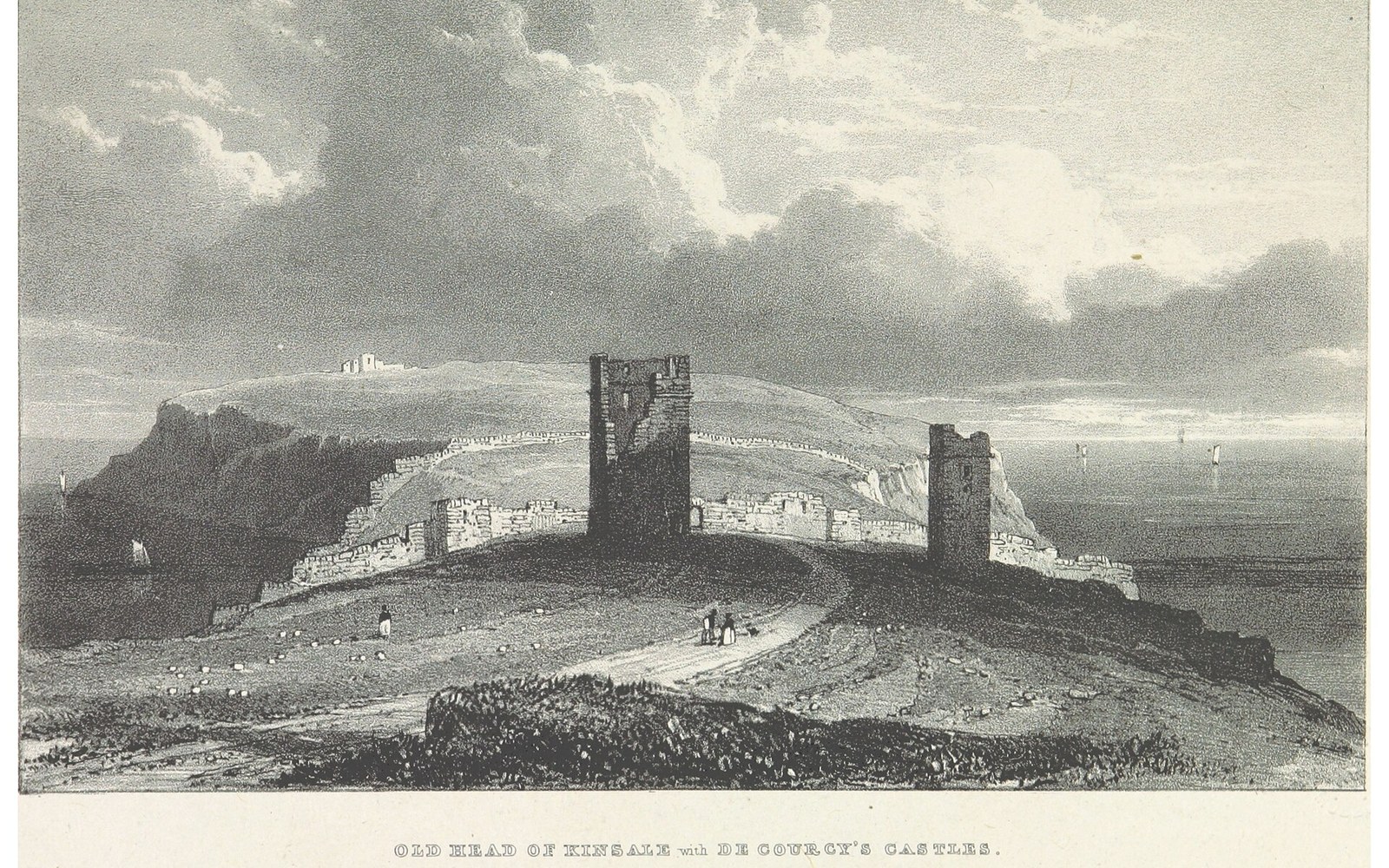
Old Tom Morris in 1892, Alister MacKenzie in 1927, and the dunes in charge of both. The routing is the geography.
Photo: Milan / Pexels · Photo: Memorial Garden at the Lusitania Museum & Signal Tower, Old Head, Kinsale · Wikimedia Commons
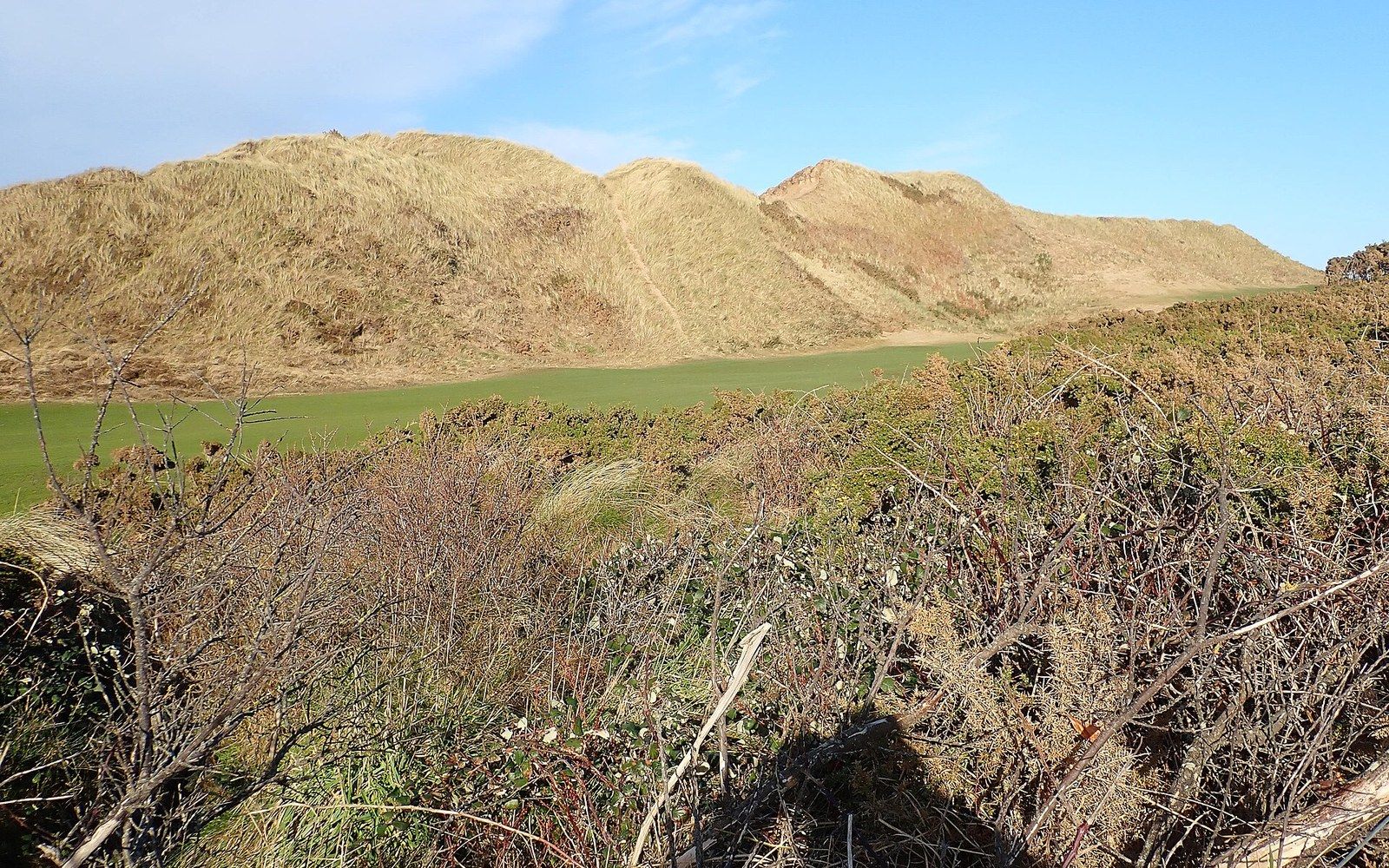
The routing through the dune ridges of the Old Course — attributed in its mature form to improvements carried out through the early to mid twentieth century, with the club's own records crediting various incremental amendments rather than a single named architect — achieves something that modern design cannot replicate on such ground. Holes like the 11th play along a dune ridge with the cliff edge visible to one side and a deep dune hollow to the other. The fairway is narrow not because a designer chose to narrow it but because the land offers nothing wider. That is not a design philosophy. It is a physical constraint that became, by long use, a virtue.
Cliff Works and What They Have Held Back
The most significant threat to the Old Course's routing integrity has come not from any redesign impulse but from the coast itself. By the 1990s, cliff recession on the estuary-facing holes had reached a point requiring active intervention. The club undertook a series of cliff-stabilisation works that involved reinforcing the dune toe — the lowest seaward base of the dune — with rock armour and geotextile revetment at several locations along the course boundary. These works were carried out in consultation with what are now the relevant state bodies, and their purpose was explicitly defensive: to slow recession rather than to reclaim lost ground.
Coastal erosion rates along the north Kerry coast, as recorded by Geological Survey Ireland, reflect a long-term pattern of cliff retreat that accelerates during storm sequences. The winters of 2013–14 and 2019–20 were particularly damaging along exposed Irish Atlantic headlands, and Ballybunion was not exempt. Wave scarps — near-vertical erosion faces cut into dune or cliff material by wave action — formed and reformed along the seaward boundary during those periods, each one destabilising the slope above it. The rock armour placed in the 1990s has been supplemented and repaired more than once since, and the club's maintenance record reflects an ongoing commitment to that defensive line rather than a resolved solution.
What has not happened at Ballybunion is the relocation of holes. The 7th, 8th, and 11th greens and tees remain on or very close to the positions they occupied when the course reached its settled modern form. That stability is the result of the stabilisation works holding, imperfectly but sufficiently, against a coastline that at several other Irish links has already forced permanent changes to routing. The ground has retreated; the course, so far, has not.
The marram grass — Ammophila arenaria, the rhizome-spreading plant that binds coastal dune sand — remains the first line of ecological defence above the reinforced cliff faces. Its maintenance at Ballybunion, including replanting programmes on disturbed dune faces and the fencing of pedestrian routes to prevent footfall from creating blowout sites, reflects the same logic that greenkeepers employ across every exposed Irish links: the plant does what no engineered structure can do cheaply, provided walkers and erosion events do not strip it first.
The Routing as Document
The Old Course's routing is, in effect, a historical document of what the Kerry coast looked like in the late nineteenth and early twentieth centuries, when the cliff line was several metres further seaward than it is now. Holes that once had more ground between them and the edge now sit closer to it. Photographs in the club's archive — some dating to the early decades of the twentieth century — show fairway widths and cliff-top angles that no longer exist in the same form. The course plays essentially the same routing, but the physical substrate has shifted beneath it.
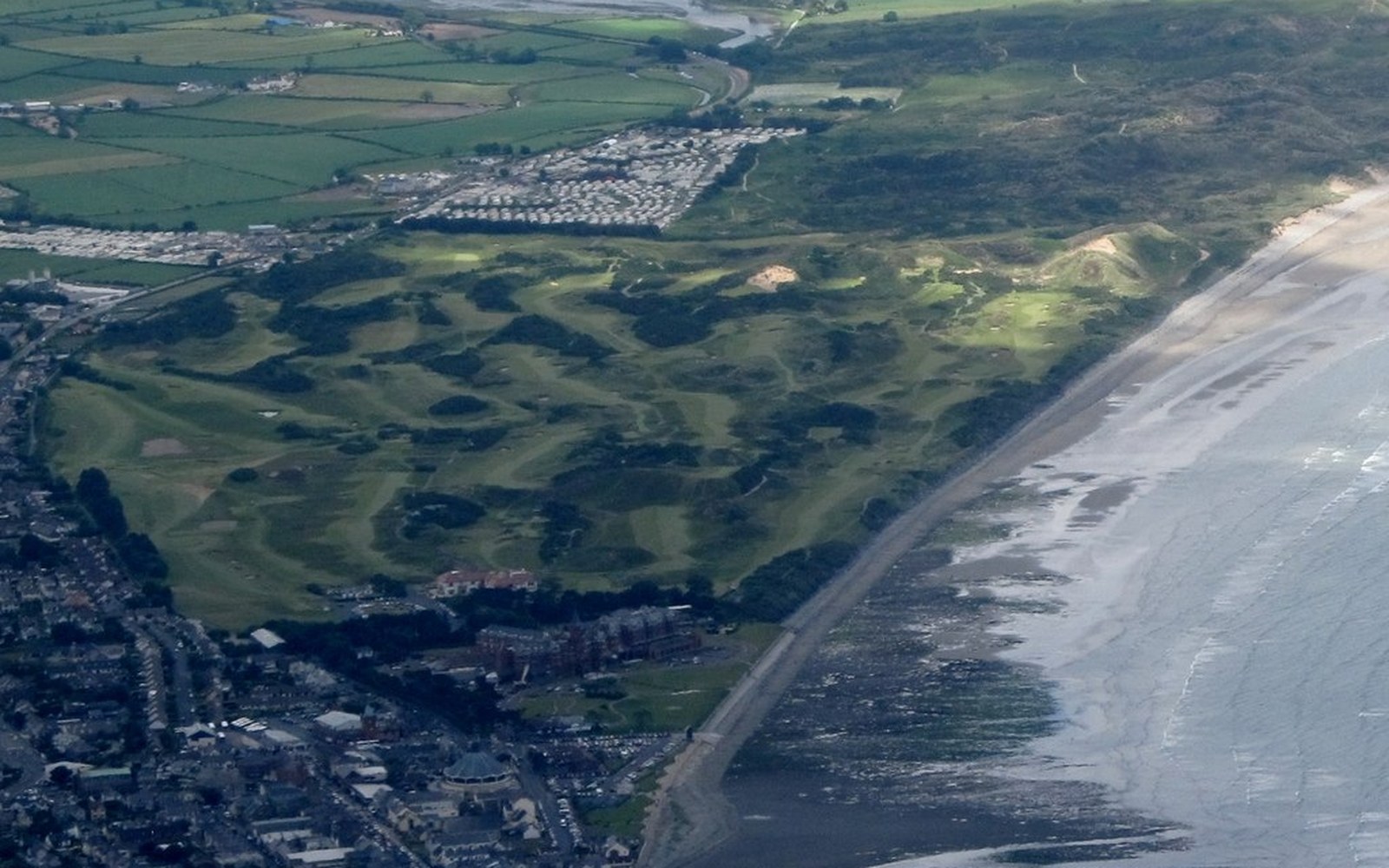
Marram-fringed, revetted, and among the most expensive things on the course to keep.
Photo: Royal County Down Golf Club-geograph-4029611-by-Eric-Jones · Wikimedia Commons
This is not unique to Ballybunion. Several Irish links carry routing decisions that predate both planning law and the systematic measurement of coastal change. What makes Ballybunion Old distinctive is the severity of the exposure combined with the quality of the holes that occupy that exposure. The R&A's Golf Course 2030 sustainability framework, which sets targets for habitat management and reduced chemical inputs at affiliated clubs, addresses the broader question of how clubs manage ecologically sensitive ground; it does not resolve the specific problem of a cliff edge retreating toward a fairway at an unknown rate.
No planning permission, no compensatory habitat, no environmental bond could be constructed today that would allow a developer to propose what Ballybunion Old already is. The course exists because it was built before the frameworks that would have stopped it were conceived. That is neither a criticism of those frameworks nor a romanticisation of the absence of them. It is simply the ground condition that every decision about the course's future must take as its starting point: the routing is fixed, the coast is not, and the works required to hold that relationship stable are expensive, impermanent, and indefinitely ongoing.
What the Old Course offers, as a result, is irreplaceable — not because the golf is merely good, which it is, but because the relationship between the designed routing and the unstable ground beneath it cannot be rebuilt elsewhere. The cliff-edge holes exist because they were built when no one was counting metres of recession per decade. They persist because the club has spent considerable resource ensuring they do.