Newcastle: The Lists Have Said This for a Long Time
Royal County Down at Newcastle has been at or near the top of every serious world ranking since the rankings began. The piece takes Harry Colt's 1920s revisions as its centre and asks what they fixed, what the revetted bunker faces cost to maintain, and what the Mournes have to do with any of it.
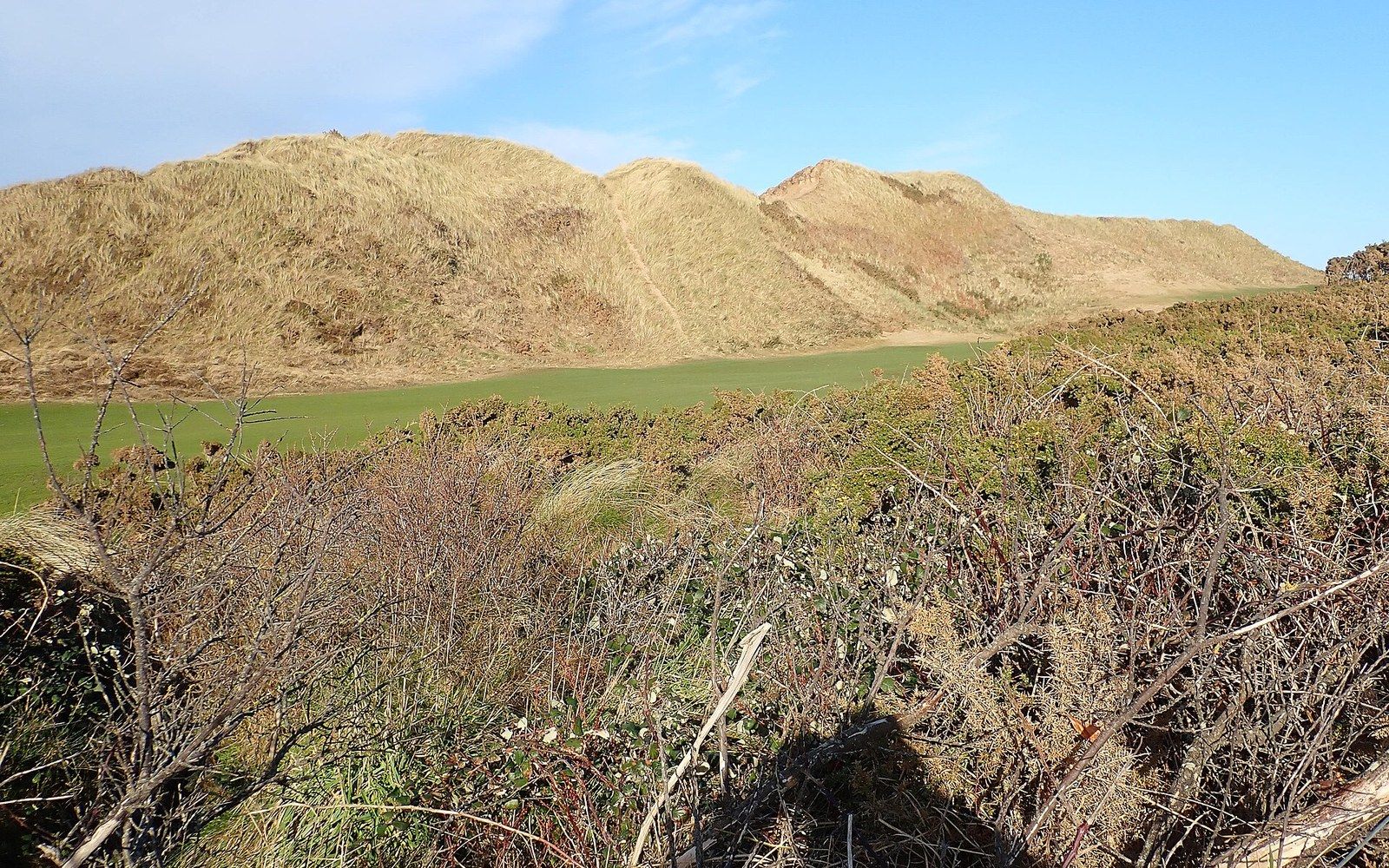
Newcastle, and the Mournes doing the framing.
Photo: Eric Jones / Geograph · Wikimedia Commons
Royal County Down has occupied the summit of world golf rankings for decades. The question worth asking is not whether it belongs there, but why Harry Colt's 1920s revisions made it so durable.
Colt's Work and What It Changed
Old Tom Morris walked the ground at Newcastle in 1889 and laid out eighteen holes across the dune ridges beneath the Mourne Mountains for £4. The bones were sound — the duneland along Dundrum Bay is among the most dramatic in Ireland, the turf fast and sandy-based, the site unambiguous. But the routing had weaknesses that accumulate when a course is examined under serious championship scrutiny, and by the 1920s, Harry Colt had been commissioned to address them.
What Colt brought to Royal County Down was sequence and severity. He sharpened the relationship between the tee shot and the approach on a number of holes where Morris's original had left the golfer with too simple a choice. Bunker positions were relocated to punish drift rather than merely catch it. The greens, already set into the dune topography, were given more deliberate approaches — ground that demanded a low, running entry on certain holes and a precise aerial one on others. The course became, in architectural terms, internally consistent: the same logic recurred across different scales of hole.
The result holds. Royal County Down is regarded as one of Ireland's premier championship links, and every credible ranking system — Golf Magazine's World Top 100, the R&A's own lists for championship staging — has placed the Dunluce course at Portrush and the Newcastle links within a handful of one another for decades. Newcastle has sat at the top of Golf Magazine's world rankings repeatedly and remained inside the global top five consistently across the period since formal rankings began in the 1990s.

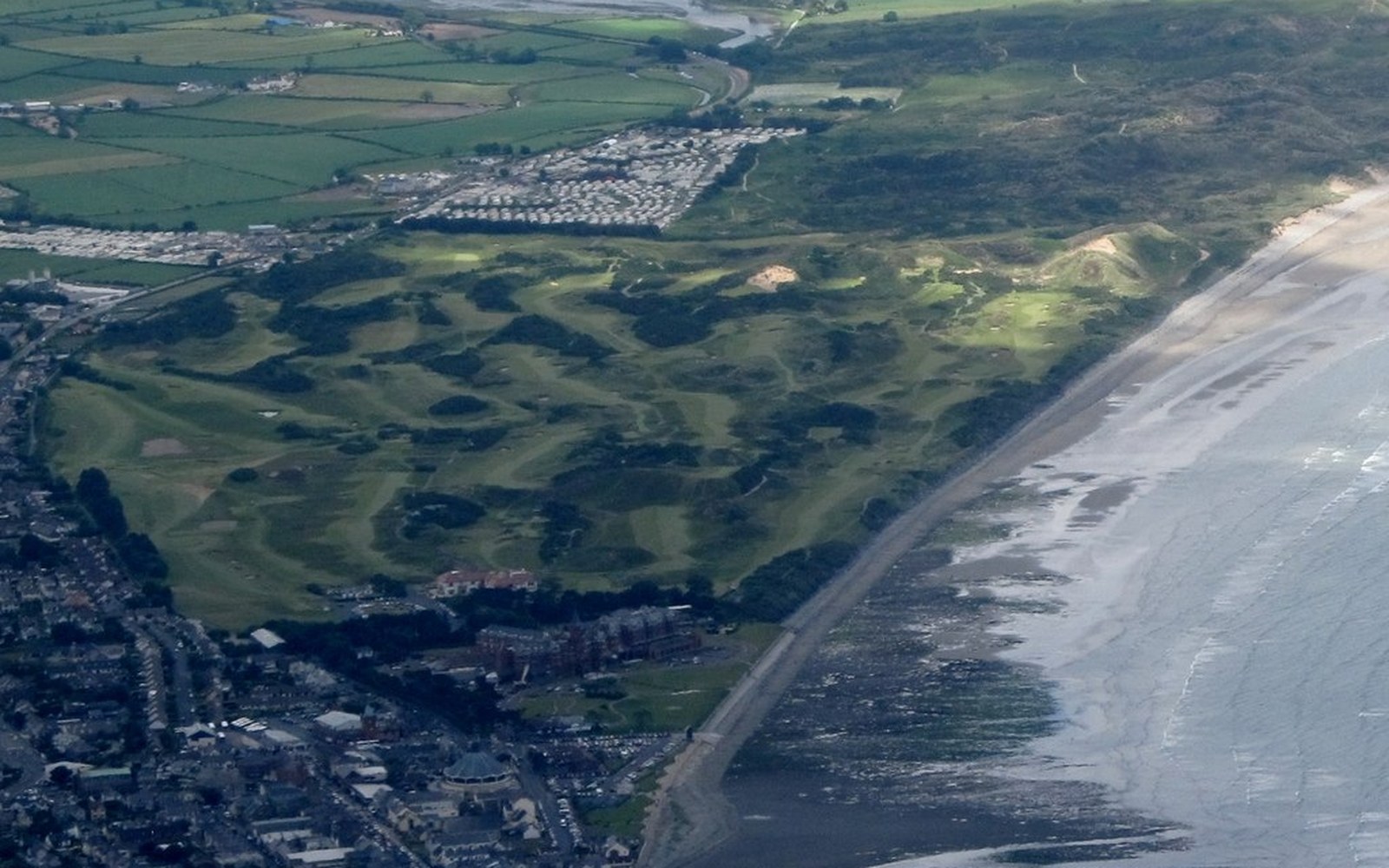
The far end of the Dunluce, where the two new holes went in. Marram-fringed, revetted, and among the most expensive things on the course to keep.
Photo: Sergei Gussev / Pexels · Photo: Eric Jones / Geograph · Wikimedia Commons
The Revetted Bunkers and the Mountains Behind
The visible signature of the course is its bunkering. Royal County Down carries revetted bunker faces — stacked-sod walls laid in a herringbone pattern, cut vertical or near-vertical into the dune sand. They are among the most photographed in the game, and among the most demanding to maintain.
A revetted face is not a static object. The sods compress, dry, and erode; individual layers shift under the weight of sand above. The club's greenkeeping team relays sections on a rolling cycle, prioritising faces that show cracking or subsidence before the sand behind begins to collapse. The work is skilled and slow. Each revetted wall that fails and is not addressed in time becomes a slumped face — losing both the visual precision and the penalising steepness that defines the shot demanded at that bunker. At a course photographed as frequently as Royal County Down, the maintenance of that aesthetic is inseparable from the maintenance of the strategic problem the bunkers pose.
The Mourne Mountains are not incidental to any of this. The low granite peaks run close behind the course's inland holes, creating a backdrop recognised in virtually every photograph of the layout, but they also affect the weather envelope the course operates within. Geological Survey of Northern Ireland's quaternary mapping records the glacially derived sandy till that underlies the coastal dune system along Dundrum Bay — material deposited at the Mourne foot and reworked by coastal processes into the duneland Morris and Colt worked on. That sand base is what gives the turf its character: free-draining, low-nutrient, naturally inclined toward the fine fescue grasses that produce firm, fast surfaces without heavy inputs.
The Mournes also push wind laterally across certain holes that would play straightforwardly in still air. The 9th — a demanding hole through the dunes — becomes a different problem in a southwest wind funnelled along the mountain flank than it does in calm. Colt understood this. His revised bunkering on that hole accounts for the miss that wind provokes, not the miss that inattention produces in benign conditions. That precision is what separates a good links from an enduring one, and endurance is precisely what the rankings, for once, have measured correctly.