Carne at Belmullet: Hackett's Dunes and Almost No Budget
Eddie Hackett worked at Belmullet with dunes and very little money, which is why the routing follows the ground rather than correcting it. The piece takes the course as a case study in the argument for working with natural topography rather than against it.
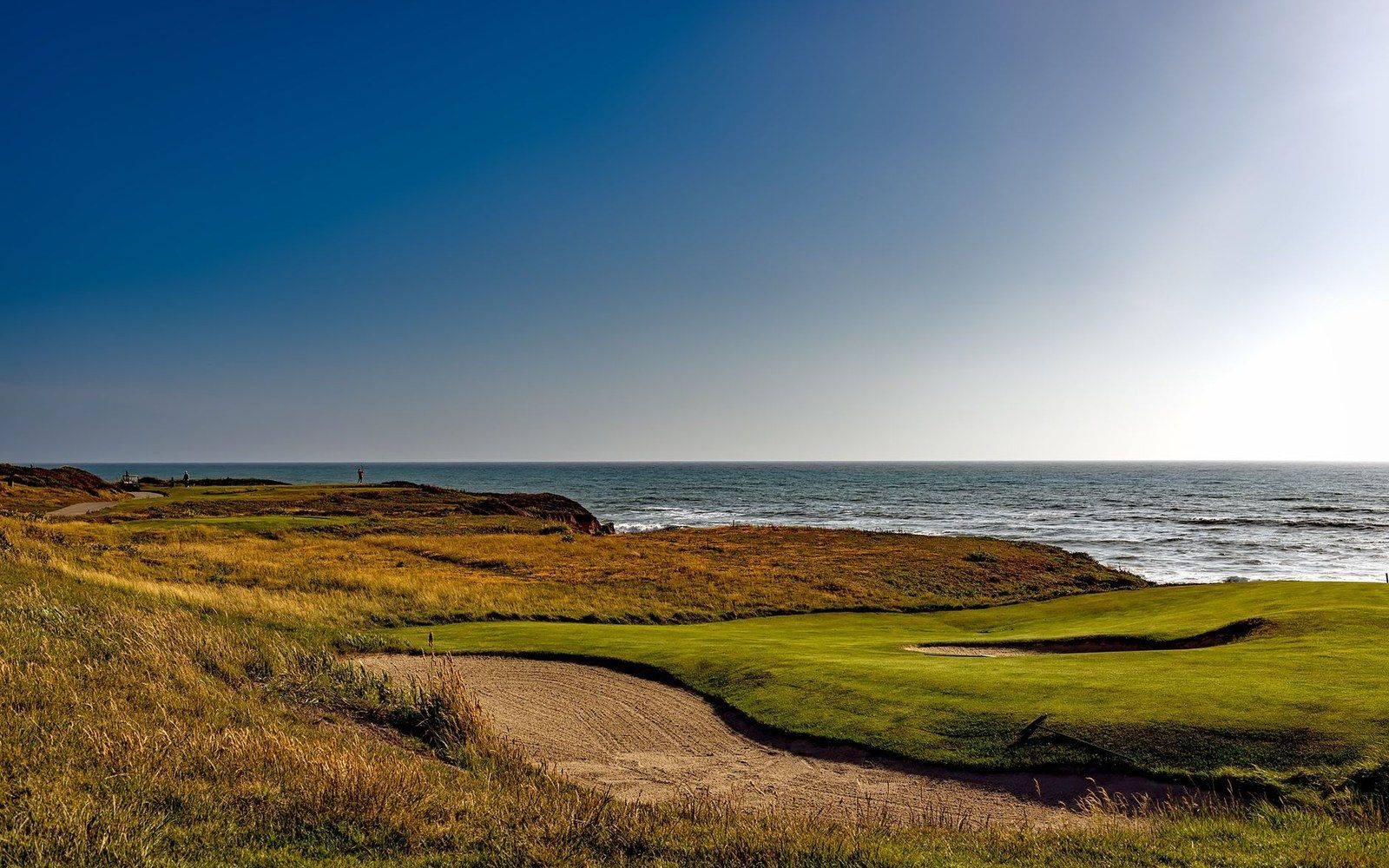
Dunes, and almost no budget to correct them with.
Photo: Pixabay / Pexels
Where the land runs out in County Mayo, Eddie Hackett drew a routing with almost no earthmoving budget — and the ground repaid him.
What Hackett Did, and Didn't Do
Carne Golf Links sits at the western edge of the Belmullet Peninsula in County Mayo, a place where the Atlantic has been piling sand into mountainous dunes for millennia. When Eddie Hackett arrived to design the course in the 1980s, he brought the same discipline he applied everywhere: look first, cut almost nothing, let the ground tell you where the holes go.
The budget offered by Belmullet Golf Club was minimal — a familiar condition for Hackett, who designed or revised more Irish links courses than any other architect, often without funds for significant shaping or infrastructure. At Carne, that constraint became method. Where a better-funded project might have levelled ridges, filled hollows, or bulldozed sightlines into the dunes, Hackett traced the corridors the dunes themselves offered. Tees sit where the ground flattens. Greens occupy natural pockets or shoulders where the sand had already settled into something receptive. The routing is a record of close reading rather than imposed geometry.
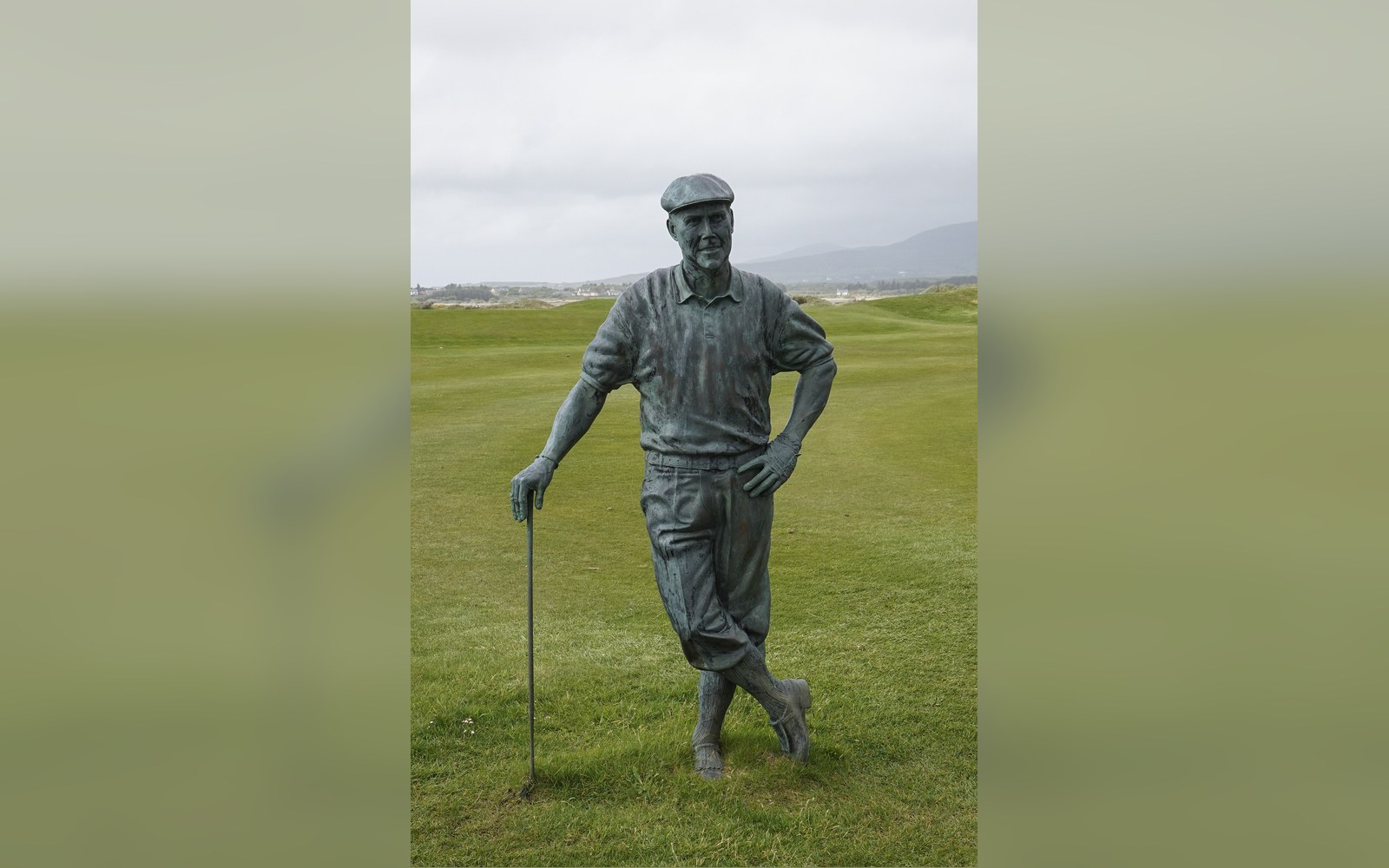
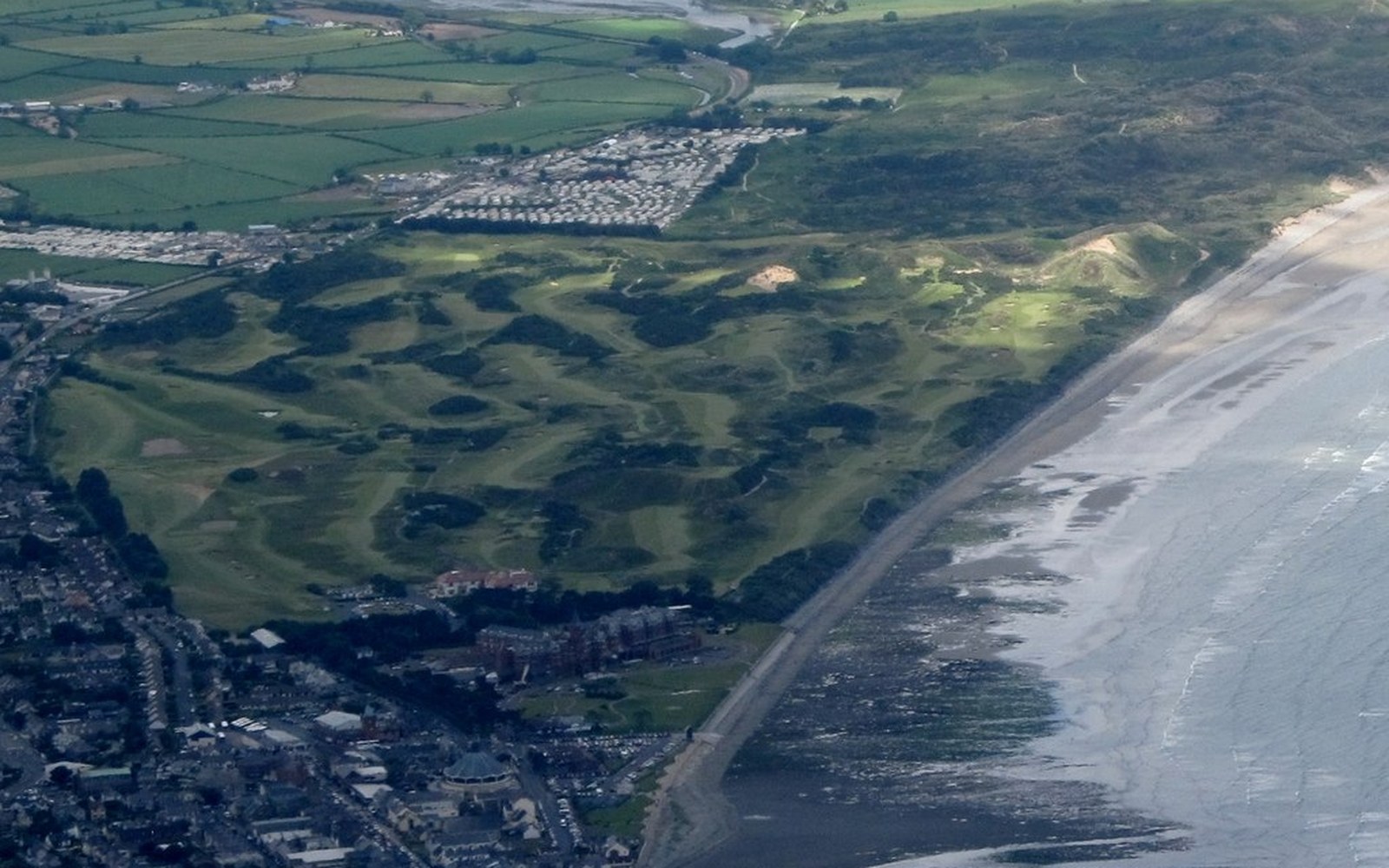
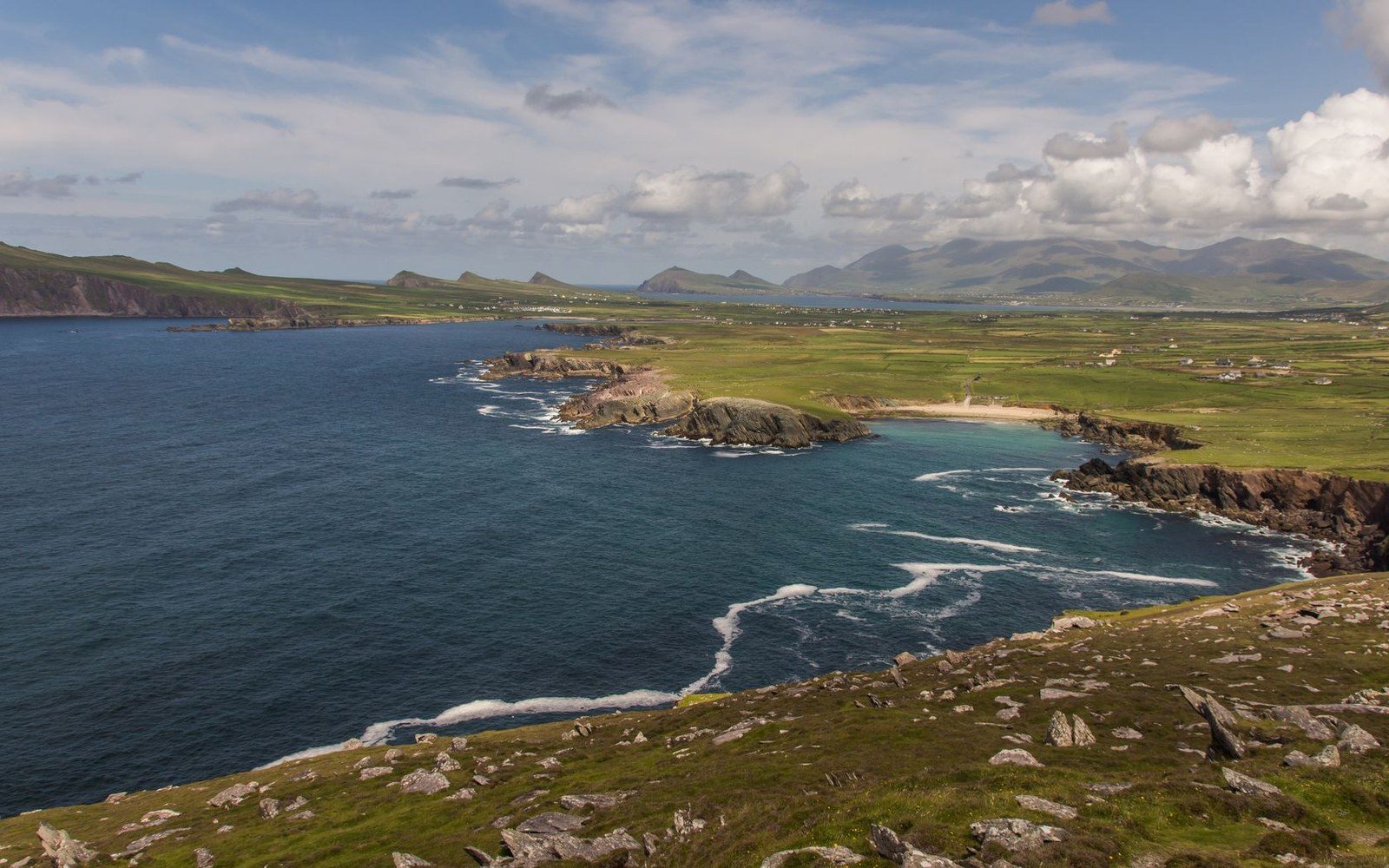
The Iveragh peninsula, at the end of the Ring of Kerry. Marram-fringed, revetted, and among the most expensive things on the course to keep.
Photos: Wikimedia Commons; Royal County Down photo by Eric Jones via Geograph
The result is a course of unusual topographic drama. Some of the dune ridges at Carne rank among the largest on any Irish links, rising well above the scale of anything at, for example, Ballybunion or Lahinch. Fairways vanish into dips and resurface a hundred yards on. Greens perch on elevated ground or nestle below it, out of sight from the tee. The landform is not decorative backdrop; it is the architecture.
The Argument the Course Makes
Carne functions as a practical counter-argument to the expensive earthmoving school of links design. When a course is built with the dune contours rather than against them, maintenance follows the same logic. The Ammophila arenaria — marram grass — that stabilises the dune faces at Carne was not transplanted wholesale to suit a regraded landform; it was already in place, binding sand through its rhizome network along the slopes the routing left intact. Fescue, which produces the firm, fast surfaces characteristic of well-maintained links turf, establishes more readily on undisturbed sandy ground than on areas where topsoil has been shifted and recompacted. A course that works with the gradient inherits ground that is already inclined to perform well.
There are practical arguments on the other side. Working with severe topography means accepting awkward walking, blind shots, and fairway lies that would not pass scrutiny at a tournament venue evaluated for broadcast clarity. Carne has never hosted, and is not configured to host, a major professional event. Its scale, remoteness, and routinely wind-battered weather close the season on terms that would be unworkable for a commercial schedule. The Geological Survey Ireland records ongoing coastal erosion on the Mayo Atlantic coast, and some of Carne's outermost holes are exposed to the long-term pressure that all western Irish links face. The dunes are a defence only if the marram holds.
What the course does offer — and what its growing reputation rests on — is a degree of topographic authenticity that is increasingly difficult to find even in Ireland. Hackett worked on ground that pre-dates any significant human alteration of the dune system, which means Carne carries a record of natural coastal landform largely intact. Alister MacKenzie's often-cited principle, that a good course should appear to have been arranged by nature rather than by a contractor, is easier to observe where a contractor was genuinely not given much scope to intervene.
Golf Ireland lists Carne among its affiliated clubs, and interest from visiting golfers has increased steadily since the course's reputation spread beyond County Mayo. The remote location — the Belmullet Peninsula is among the least-developed stretches of the Irish Atlantic coast — filters the traffic somewhat. The land tolerates that arrangement rather well.