Tralee: The First Arnold Palmer Links in Europe
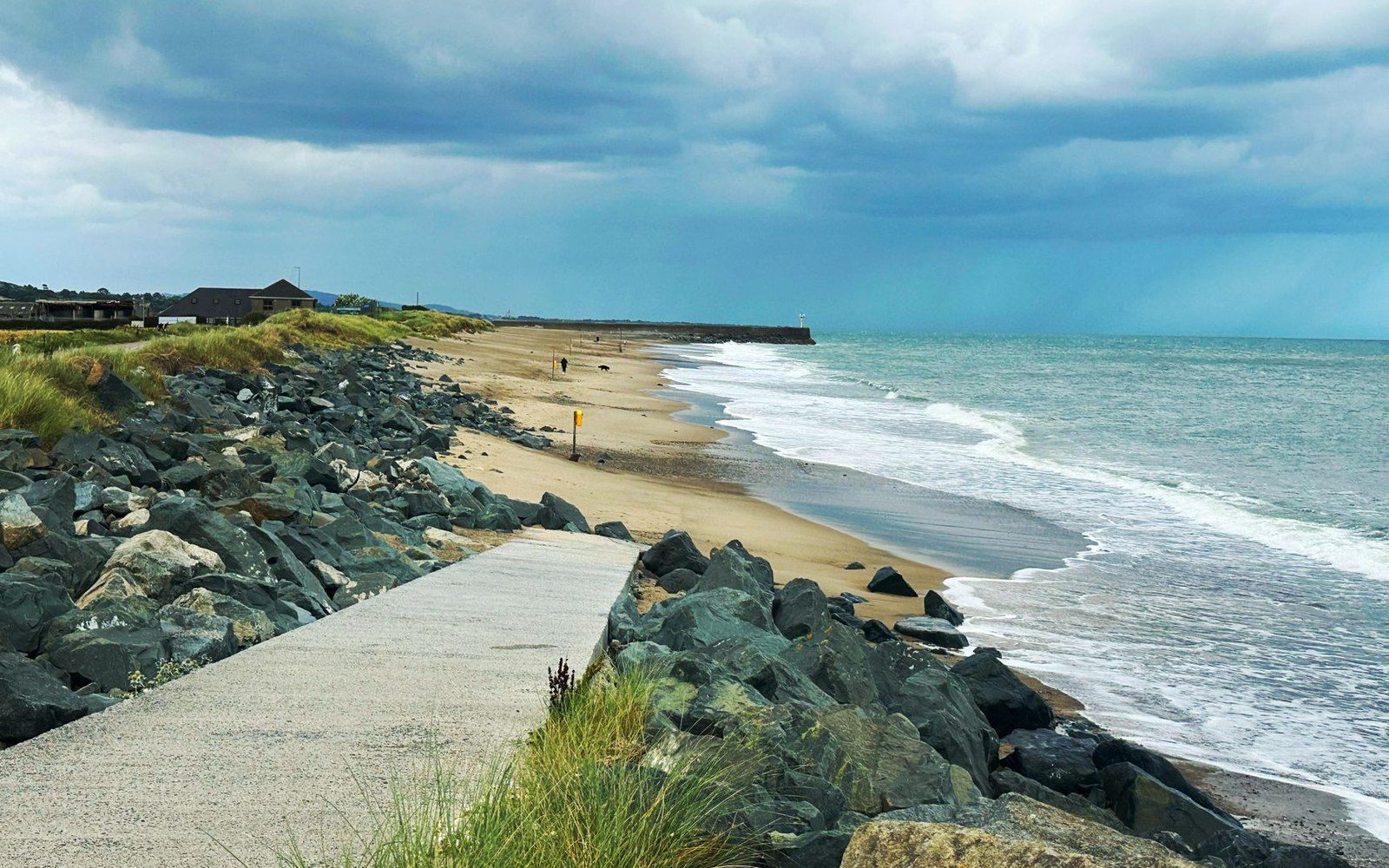
Arnold Palmer's 1984 design at Barrow on the Dingle Peninsula is the only links in Europe bearing his name as architect. The piece takes the site — cliff-edged, dune-backed, facing the Atlantic — and Palmer's design decisions against the conventions of American resort architecture he was simultaneously building elsewhere.
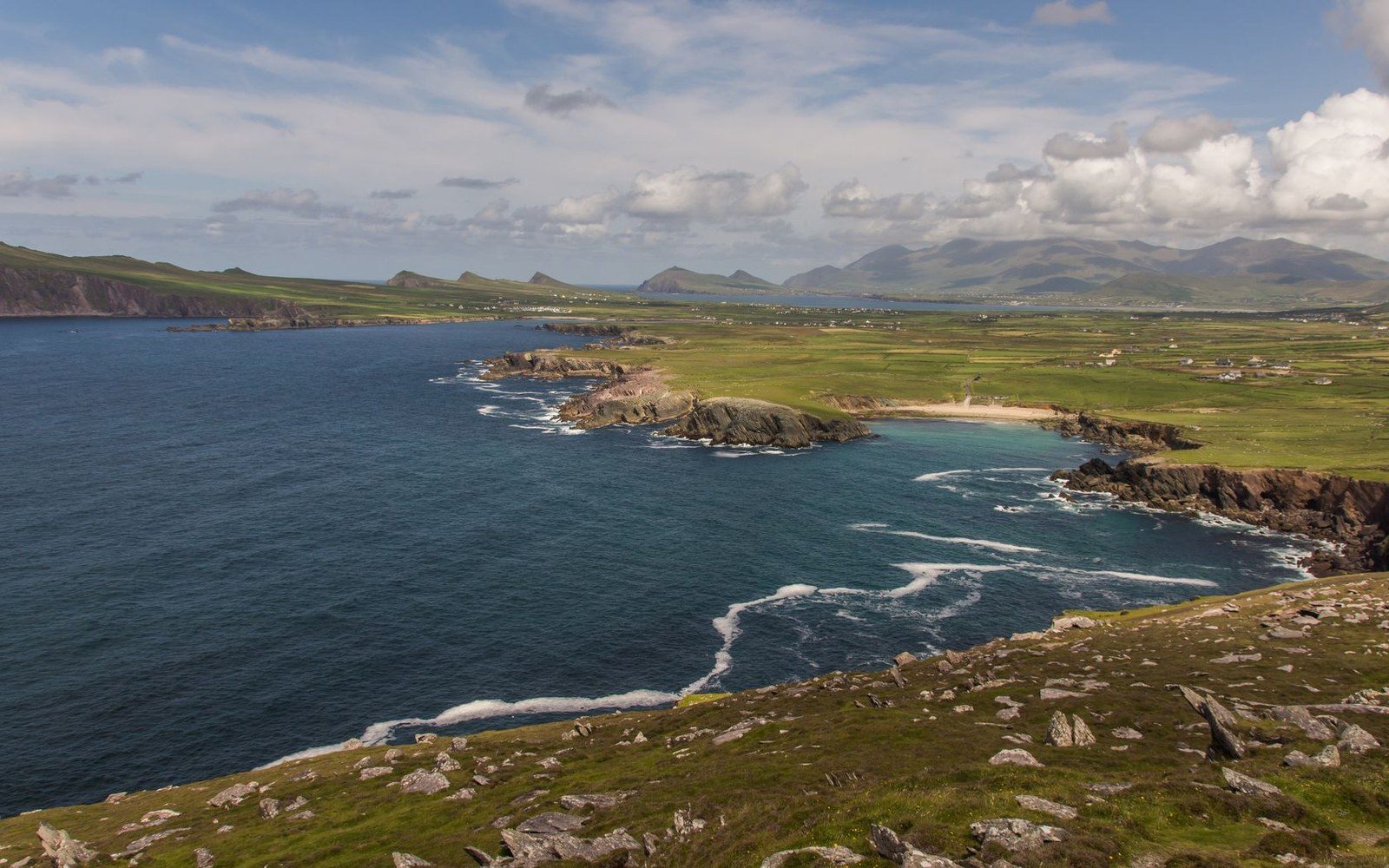
Barrow: cliff-edged, dune-backed, facing the Atlantic.
Photo: Lachcim Kejarko / Pexels
The only links course in Europe with Palmer's name as architect was also, by all accounts, the one that surprised him most.
The Site Before the Course
The land at Barrow, on the far western edge of the Dingle Peninsula in County Kerry, was not a commission that came with a blank cheque. When Arnold Palmer arrived in 1984, the ground was already exceptional: cliff-edged along its Atlantic face, backed by substantial dune ridges, and exposed to the kind of prevailing wind that requires a designer either to fight the terrain or submit to it. Palmer, whose design practice was simultaneously producing manicured resort courses across the American Sun Belt, submitted to it — at least in large part.
The site sits within the Barrow peninsula, looking north-west across Tralee Bay and the open Atlantic. The Dingle Peninsula's geology delivers Old Red Sandstone headlands alongside sandy coastal ground that shifts and compresses in ways that reward routing rather than earthmoving. Palmer and his design partners kept earthmoving to a minimum on the most dramatic stretches of the course, where the landform — cliff drops, dune crests, natural hollows — provided what no contractor's budget could manufacture.
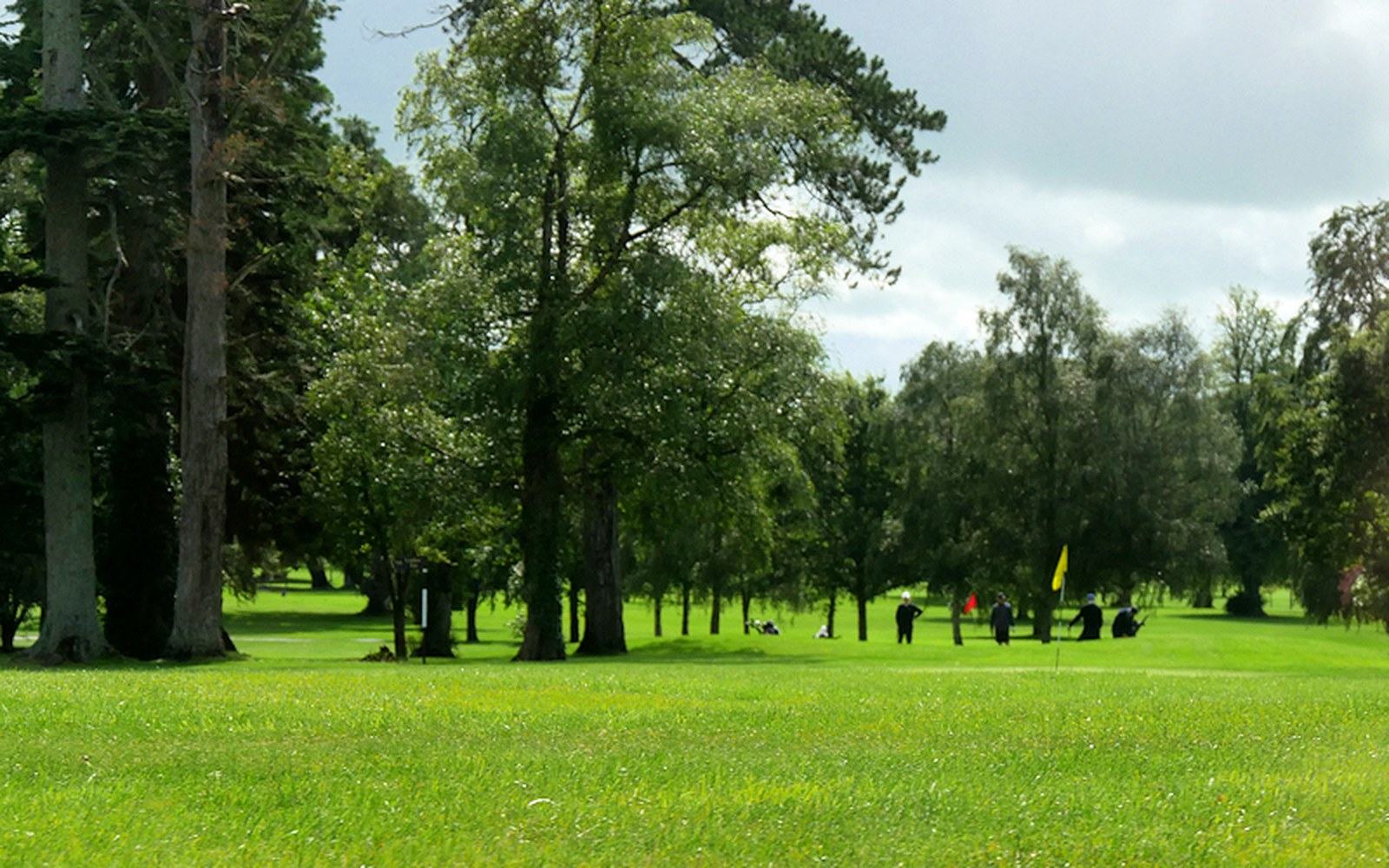
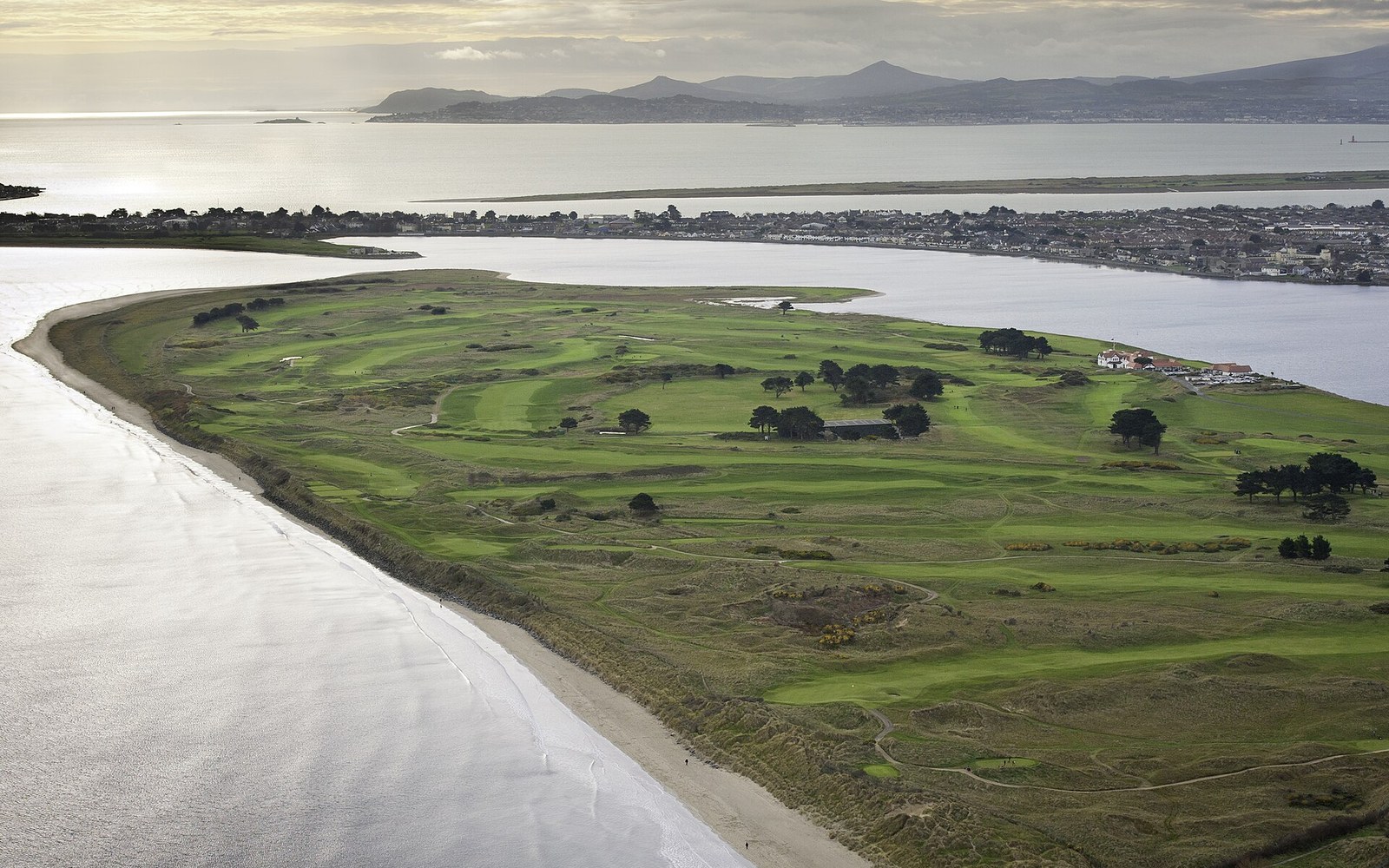
The parkland course after the 2018 rebuild. Grazing beside the first.
Photo: Adare Manor Golf Club - geograph.org.uk - 6297406 · Wikimedia Commons · Photo: Becky L / Pexels
What Palmer Did Differently
The Tralee commission sat oddly within Palmer's portfolio. His American practice had built courses that relied on irrigation, bent-grass greens, and the visual idiom of heavily shaped surrounds. Barrow offered none of those conditions and made most of them unsuitable even if they had been attempted. The fescue-dominated links turf that settled across Tralee's fairways operates on the principles that govern every serious Irish links: firm, fast, and deeply intolerant of the overwatering that keeps American resort turf alive.
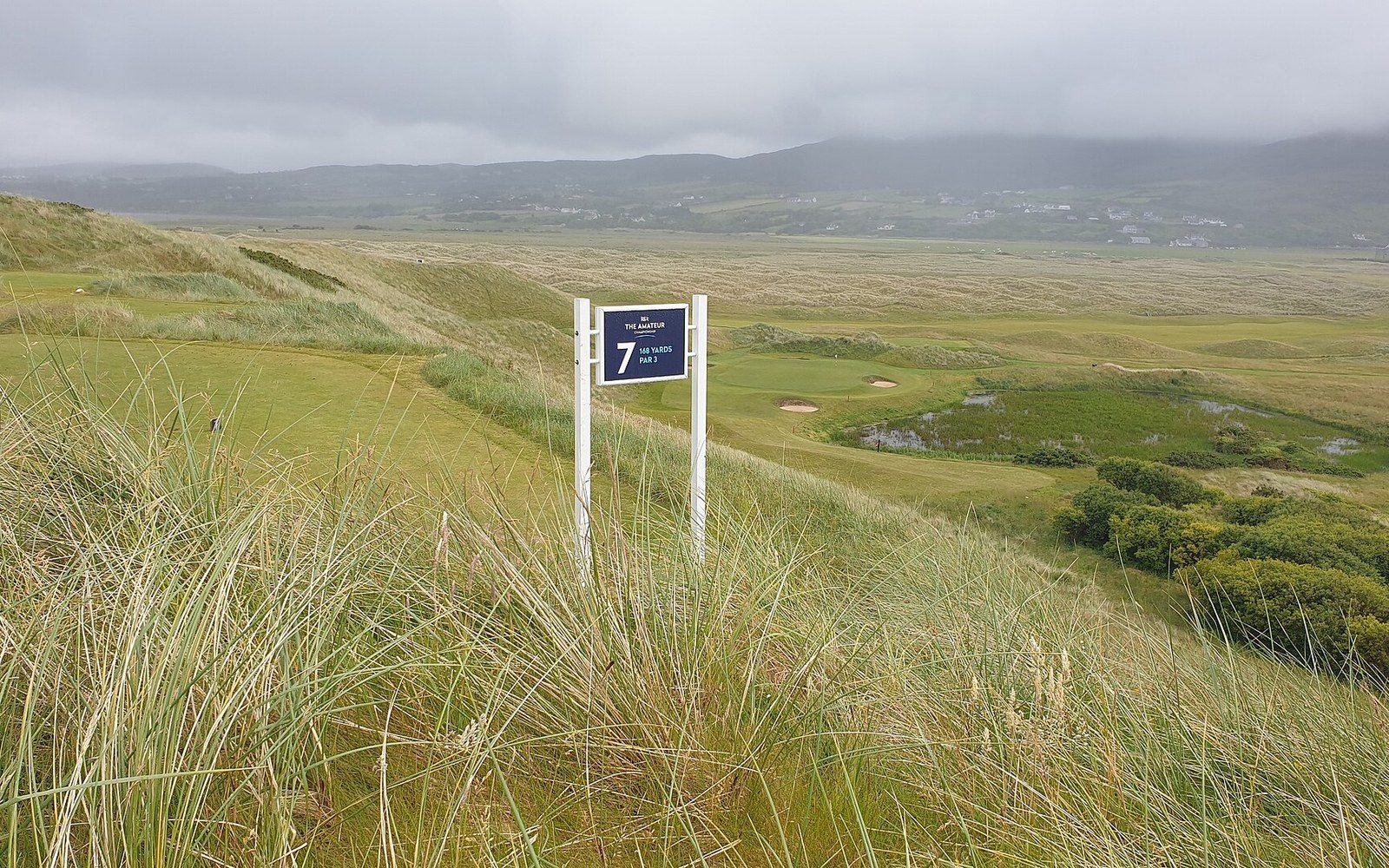
The routing's most discussed feature is its use of the cliff edge on the back nine, where several holes run directly above Atlantic drops with no buffer between the fairway and the fall. This is not a design invention — it is a consequence of the land — but the decision to press holes to that edge rather than retreat to safer inland ground reflects a willingness to prioritise drama over margin. The par-three 17th, in particular, plays across a void of cliff and sea that no amount of course architecture could manufacture on inland ground.
The Tralee Golf Club at Barrow remains Palmer's single European links design. It is neither his most widely analysed work nor the most cited in architectural literature, but it represents a specific design test: whether a practice trained almost entirely on American conditions could adapt to ground that pre-dates the design conventions applied to it.
The Course in Its Landscape
Tralee occupies ground that the Geological Survey Ireland classifies among the more actively dynamic stretches of the Irish Atlantic coast. Dune systems here are not static; the Ammophila arenaria — marram grass — that stabilises the dune crests is both the course's protection and, where it thins, its vulnerability. The Tralee club, like all courses on this coast, carries an ongoing maintenance obligation to the dune vegetation that Palmer's original design assumed would remain intact.
Championship use has been consistent but not at the highest tier. The Irish Open has not come to Tralee, and the logistical constraints of the Barrow peninsula — no motorway approach, limited visitor infrastructure — make it an unlikely candidate for a major DP World Tour event. The course's reputation rests instead on its architectural identity, the quality of the terrain Palmer was handed, and the accuracy with which his routing allows that terrain to speak.
For a designer whose name appears on hundreds of courses across the United States, Tralee is an outlier in the best sense: a site so specific in its character that the usual tools of the trade became secondary to the ground beneath them.