The Open at Royal Portrush: 2019, and Then 2025
The Open returned to Portrush in 2019 for the first time since 1951, with the Hawtree alterations in place and the coastline works done. The 2025 running is the confirmation that the event is a permanent part of the rotation. The piece covers both championships: the 2019 result, the 2025 context, and what the R&A's scheduling means for the course.

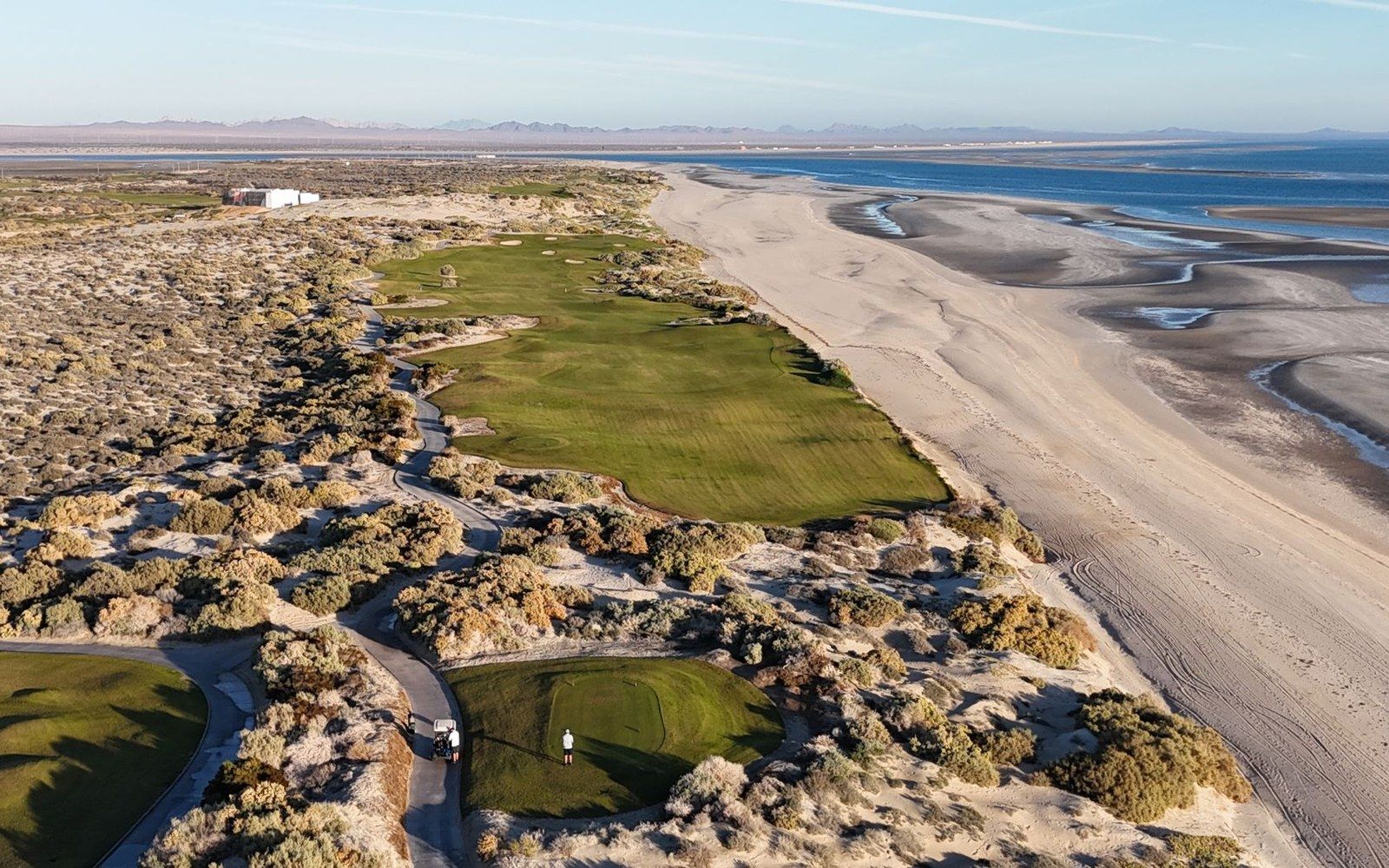
The gallery banks itself on the dunes.
Photo: andrew shelley / Pexels
The first Open at Portrush since 1951 drew the largest crowds in Irish sporting history; the 2025 return confirms the course is no longer a one-time exception but a fixed point in the Championship rotation.
Sixty-Eight Years and the Hawtree Holes
Royal Portrush last hosted The Open Championship in 1951, when Max Faulkner won with rounds of 71, 70, 70 and 74, becoming the last English-born player to lift the Claret Jug until Tony Jacklin won in 1969. The Dunluce Links had been considered for the rota in the decades that followed, but a combination of logistical infrastructure — roads, capacity, transport to a course on the northeastern tip of the Antrim coast — and the absence of two holes that could handle modern professional yardage kept it off the schedule. The R&A was specific about what it needed: Portrush would require additional length and a revised routing that did not compromise the course's internal logic.
Martin Hawtree's answer was to cut two new holes — the 7th and 8th on the revised card — into dunes that the club had owned for years but never routed over. The displaced holes (the original 17th and 18th) became the Harry Colt Course, ensuring that the architectural heritage was preserved rather than erased. The new holes moved through higher, wilder duneland north of the original routing, giving the course a stretch of terrain that Harry Colt's 1932 design had not touched. Hawtree's brief from the R&A also required work on infrastructure: spectator corridors, hospitality positions, media facilities, and access from the town. Northern Ireland's road network and Portrush's own capacity had to be restructured around a tournament that would draw crowds of well over 200,000 across the week.

Spectator ground, designed as such. Rock armour buys time and changes the look of a hole permanently. Where it goes in, it goes in because the alternative was losing the hole.
Photo: View of Adare Manor from Golf Course · Wikimedia Commons · Photo: Royal Portrush 8th hole · Wikimedia Commons
The 2019 championship drew a then-record attendance for a major golf event in Ireland, with the R&A confirming figures that exceeded 237,000 across the week — the largest crowds in the event's history at an Irish venue, and a number that placed the 2019 Open among the best-attended championships of the modern era anywhere in the world. The town of Portrush, with a population well under ten thousand, temporarily became one of the most concentrated sporting venues on the island.
Shane Lowry and What the Course Did to a Field
The result of the 2019 Open is inseparable from the weather. The final round, played on the Sunday, was contested in brutal conditions — winds that turned what had been a scoring exercise on Thursday and Friday into attrition. Shane Lowry, from County Offaly, had built a four-shot lead after fifty-four holes with some of the best scoring of the week. His final round of 72 in improving but still demanding conditions gave him a six-shot victory over Tommy Fleetwood, with a 72-hole aggregate of 15 under par. It was the first Open won by an Irish player since Pádraig Harrington's back-to-back titles at Carnoustie in 2007 and Royal Birkdale in 2008, and the first won on Irish soil since 1951.
What the course itself produced deserves noting separately from the result. The Dunluce Links in 2019 was firm, fast, and heavily dependent on wind direction for its severity. Holes running into the prevailing southwest wind — the stretch from the 6th to the 10th in particular — were playing as the hardest on the course through the middle rounds. The revetted bunkers, rebuilt to Hawtree's specifications in the pre-championship works, held their shape through a week of variable weather. The new 7th, a long par five cutting through the raised dunes above White Rocks beach, played as one of the most distinctive holes on the rota — a hole that simply does not exist anywhere else in championship golf, with the Antrim coast visible for the full length of the approach.
The scoring profile over the week confirmed that Portrush operates differently from the parkland or heathland courses that appear elsewhere in the rotation. Aggregate scoring fluctuated with conditions in ways that Augusta or Wentworth cannot produce. Sixteen of the world's top twenty ranked players at the time competed; the cut removed several who had posted respectable scores on the opening two days before the wind changed. That volatility — rooted in the exposed Atlantic-facing topography and the sand-based turf that dries and firms faster than any irrigated surface — is precisely what the R&A's scheduling policy values in a links venue. The R&A's governance documentation on venue selection confirms that links courses are prioritised partly because of this variable character, which parkland venues structurally cannot replicate.
The 2025 Return and What the Rotation Now Means
The 2025 Open Championship at Royal Portrush is the confirmation that 2019 was not a one-off restoration. When the R&A announced the schedule running through the mid-2020s, Portrush was named alongside St Andrews, Royal Liverpool, Royal St George's, and the Scottish links venues as a fixed point in the rotation rather than an occasional deviation from it. That designation matters architecturally and logistically: infrastructure built for 2019 does not have to be rebuilt from scratch, the course's routing is now stable around the Hawtree holes, and the Northern Ireland transport improvements put in place for the first return remain in service.
What 2025 adds to the Portrush record is a test of whether the course performs as a reliable championship venue or as one whose 2019 result was inflated by circumstance — the homecoming narrative, the weather, the singular moment of Lowry's victory. The R&A's choice of venues carries an implied evaluation: Geological Survey of Northern Ireland data on the Antrim coast indicates that the White Rocks shoreline, immediately below several of the course's northern holes, is subject to ongoing erosion. The dune toe at the course's seaward margins requires monitoring that the club carries out in coordination with the relevant environmental authorities. The holes Hawtree routed through the high dunes are less exposed than those of the old routing that ran closer to the cliff edge, but the coastal context does not disappear because a championship is scheduled there.
For the purposes of the rotation, the R&A treats Portrush as it treats any major links: the course must be presentable to the standards of a professional championship, it must be able to handle the infrastructure load, and it must produce results that reflect the range of difficulty the organisation expects from a links in summer conditions. The 2025 championship will determine a second Open champion at Portrush, adding a second line to a results record that had stood at a single name — Faulkner — for longer than any other venue in the rota. Whatever the result, the scheduling itself has already settled one question: Royal Portrush is back in the rotation, and the infrastructure and architectural modifications that made the return possible have been judged sufficient to keep it there.
The Dunluce Links now holds two open chapters in its championship record, separated by sixty-eight years of absence. The ground it is built on — marram-stabilised dunes above an eroding Antrim shoreline, with Harry Colt's bones and Martin Hawtree's revisions beneath — is the same ground it has always been. The sea does not move on a schedule the R&A sets.