Adare Manor 2027: What the Ryder Cup Is Coming Back To
The Ryder Cup's return to Ireland in September 2027 — the first since the K Club in 2006 — goes to a parkland course that was rebuilt specifically in anticipation of it. The piece covers the DP World Tour's position after the LIV split, the prize-fund context, and what the Fazio rebuild changed about the course's suitability as a spectator venue.
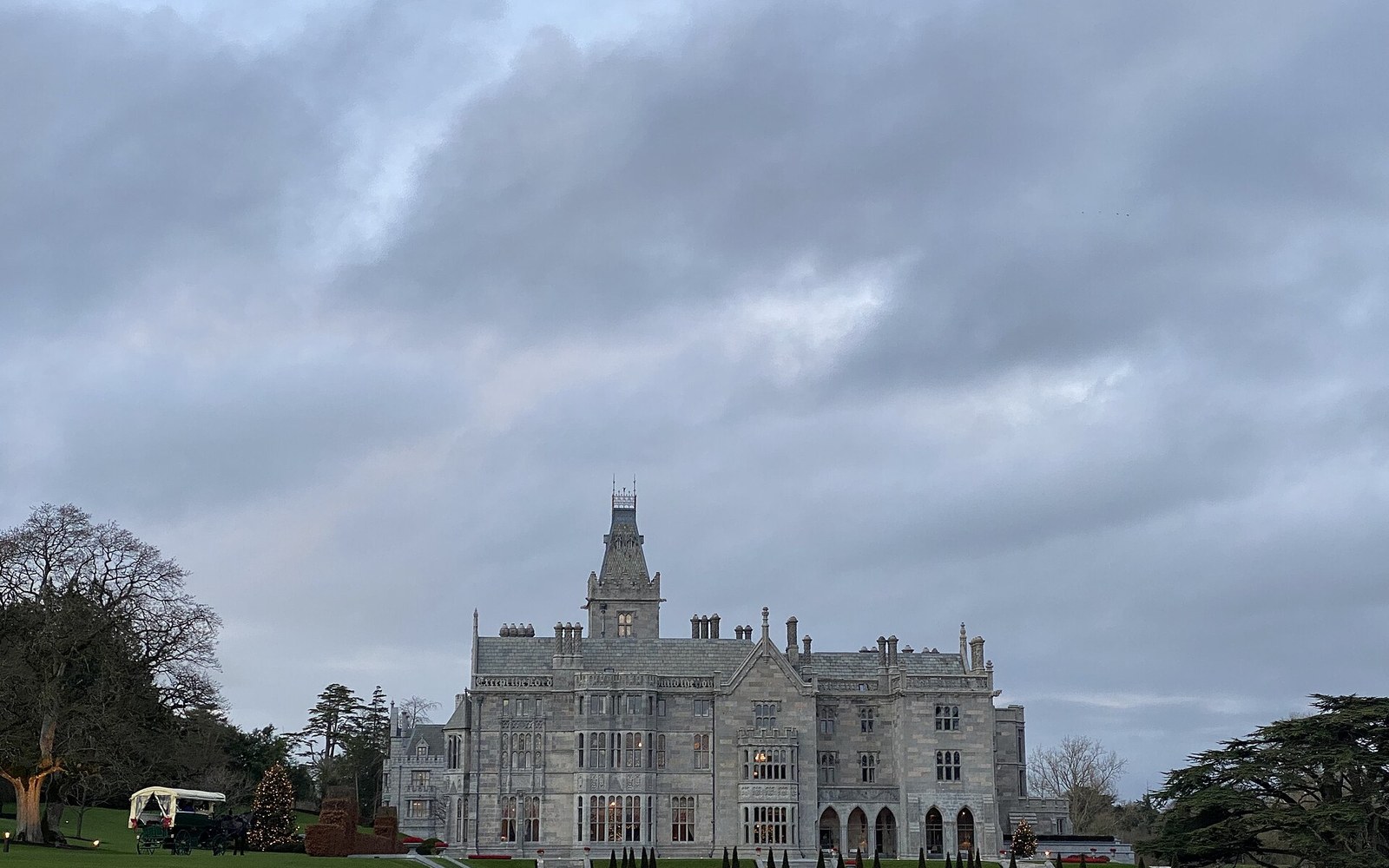
Spectator ground, designed as such.
Photo: View of Adare Manor from Golf Course · Wikimedia Commons
Ireland's second Ryder Cup goes to a parkland rebuilt for the purpose — and lands in a European team event that looks quite different from the one that came before.
The Ground Itself
Adare Manor's course sits in County Limerick, on the estate of a nineteenth-century Gothic Revival manor house that was transformed into a luxury hotel. The golf course was originally laid out in the 1990s and carried the kind of layout that accumulates over decades without a single governing design logic. When the Ryder Cup was awarded to Adare, the ownership commissioned Tom Fazio — whose firm had no prior Irish footprint — to rebuild it from scratch. The work was completed in 2018 at a reported cost in the region of forty million dollars, and what was delivered is a course recognisably designed as a spectator venue: wide corridors, mounded viewing areas, and a closing stretch engineered to concentrate crowds at the decisive holes.
Fazio's routing kept the river Maigue as a recurring element, used the estate's mature woodland as a natural screen between holes, and brought the par-five 18th into a natural amphitheatre that will serve the Ryder Cup's final-day theatre in ways the previous layout could not. These are parkland conditions — bentgrass fairways and greens maintained on irrigated, managed ground — nothing like the fast, unpredictable surfaces at Royal Portrush or Portmarnock. The game played here in September 2027 will be a different test, and the scoring will likely reflect that.
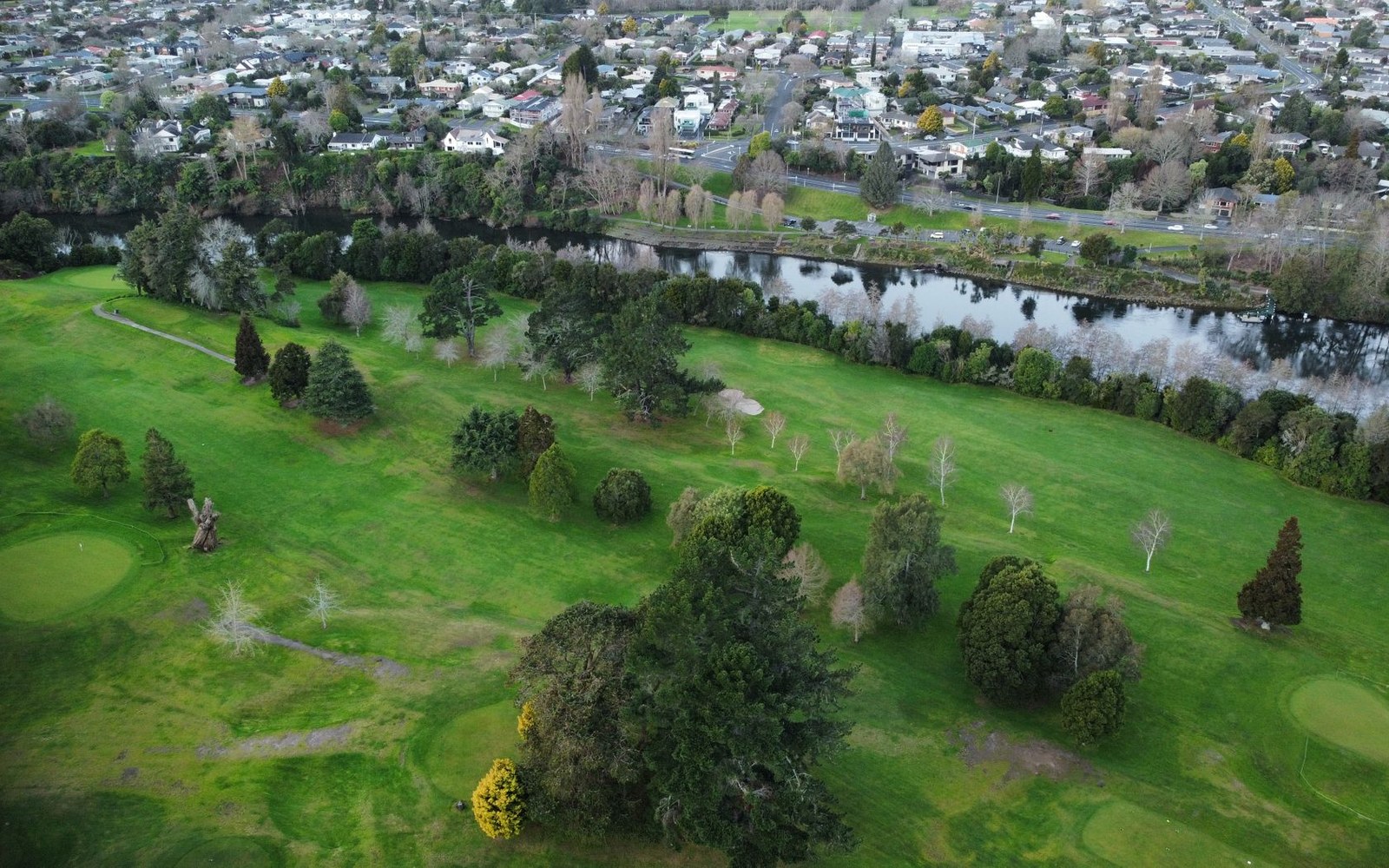
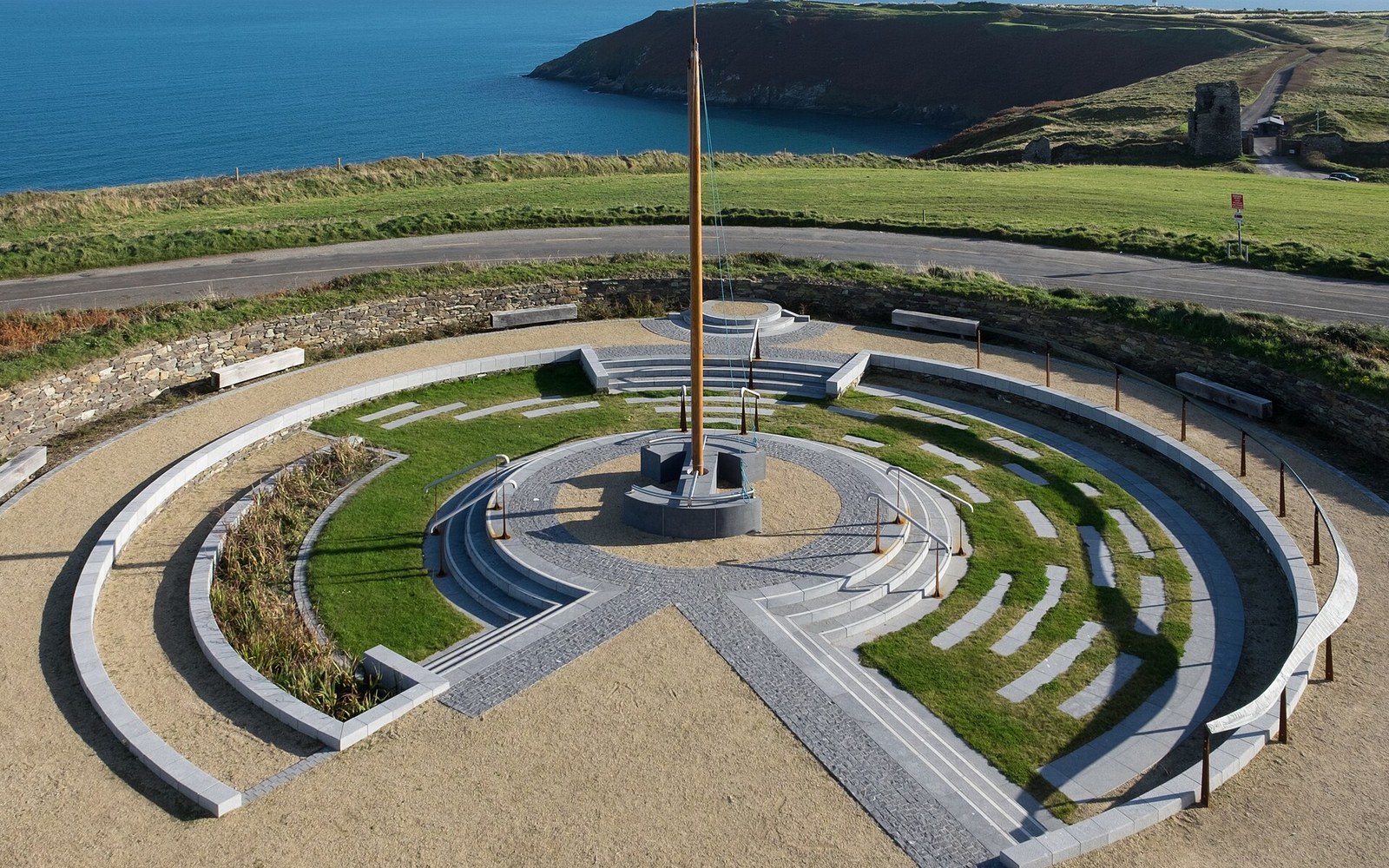
The benchmark 2027 will be measured against. The routing is the geography.
Photo: New Zealand / Pexels · Photo: Memorial Garden at the Lusitania Museum & Signal Tower, Old Head, Kinsale · Wikimedia Commons
The Team Event and the Context Around It
The 2027 match will be the first Ryder Cup in Ireland since the K Club in 2006, where Europe defeated the United States by 18½ to 9½ in a margin matched by Europe's win at Oakland Hills in 2004. That result came on another Irish parkland course, on the Kildare bank of the Liffey, and the Adare contest will inevitably be framed against it.
What the 2027 competition enters is a European team structure under pressure. Since the LIV Golf breakaway began drawing players from 2022, the DP World Tour — which co-owns Ryder Cup Europe and stages the match jointly with the PGA of America — has managed an ongoing eligibility question about which defecting players can or cannot qualify for the European team. The rules have been adjusted more than once, and the final qualifying criteria for Adare will again be subject to the DP World Tour's discretion alongside Ryder Cup Europe's captain's picks. The prize fund for the Ryder Cup remains zero: the match is played for points and for the cup, not for individual prizemoney, which makes it structurally unlike every other event on either tour's schedule.
The captain for Europe will be named through the established Ryder Cup Europe process; no appointment had been formally confirmed at the time of writing. The United States PGA of America controls the opposing captaincy on the same timeline.
What the Rebuild Actually Changed
Beyond the spectator infrastructure, Fazio's redesign altered the course's competitive identity in ways relevant to a match-play format. Match play rewards holes that create genuine decision points — risk-reward par fives, driveable par fours, short par threes over water — and the new routing delivers more of these than the previous layout did. The river appears on seven holes. The par-five 13th and the closing par five are the holes the design is most discussed in relation to, both likely to produce decisive moments under pressure.
The R&A's Golf Course 2030 sustainability framework sets expectations for major championship venues on water management and chemical reduction, but Adare is a parkland venue operating under different agronomic conditions than an Atlantic links — conditions that demand irrigation and more intensive maintenance by definition. What the rebuild produced is a course that will hold up to the traffic of a Ryder Cup week, with gallery movement managed by design rather than retrofitted after the fact.
Twenty-one years separate the K Club and Adare. The course is ready. The team structures that will fill it are still being settled.