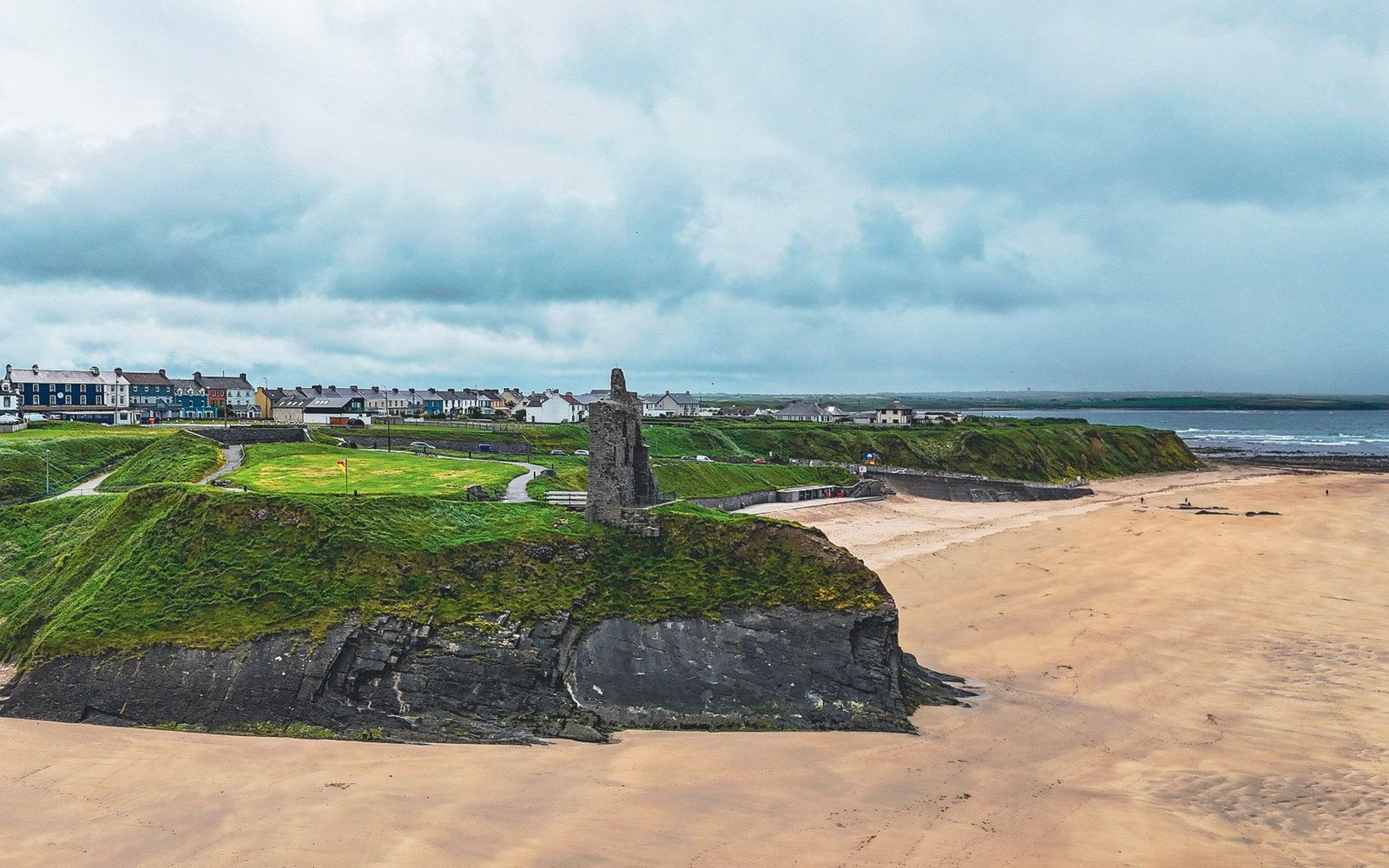
A Blowout Starts as a Footpath
The sequence from worn path to bare sand to open ridge gap, and the three responses — fencing, brush thatching, marram replanting — in the order they have to happen. Documented from the R&A's course management guidance and club-level incident records.
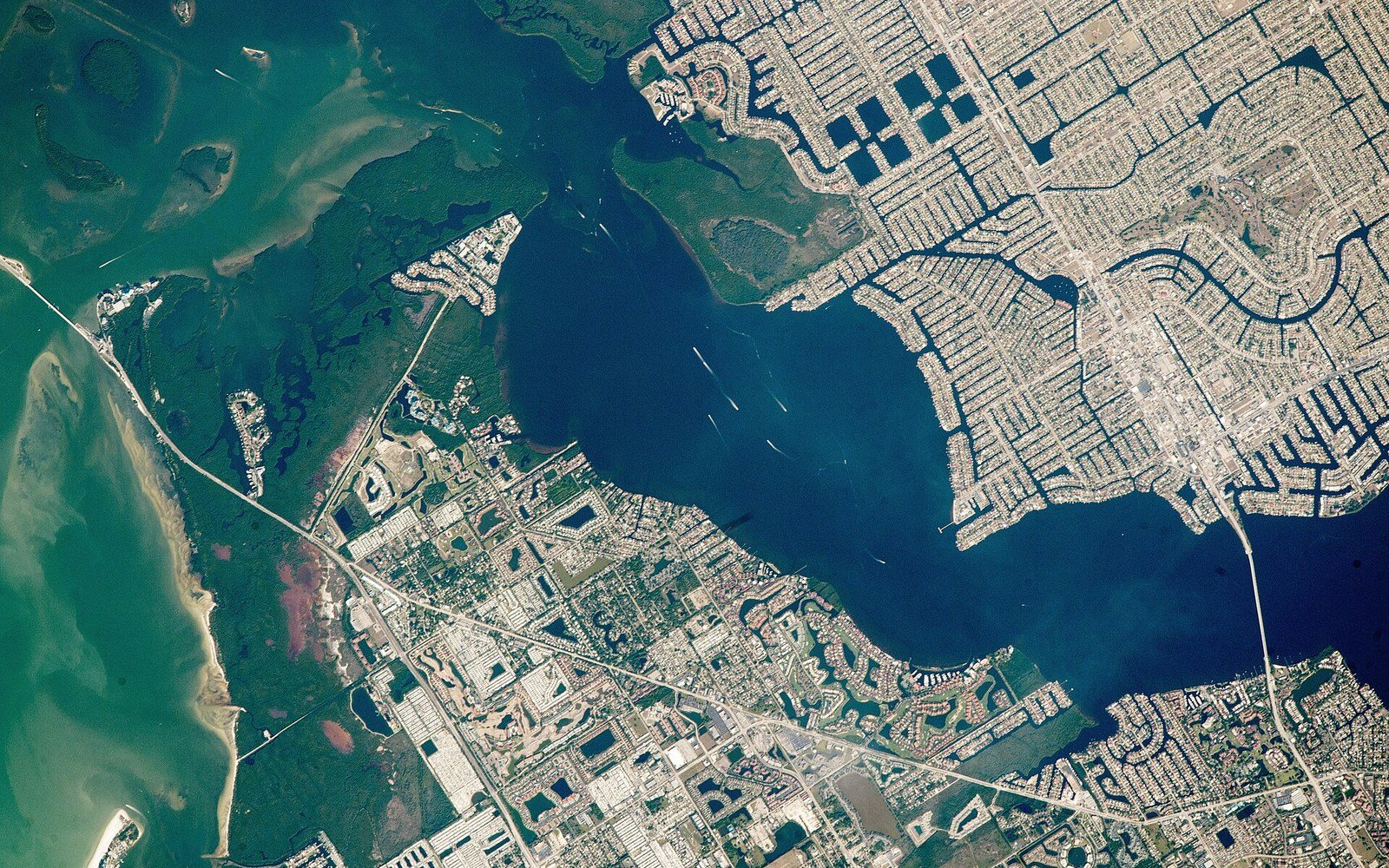
A gap in the ridge that began as a footpath.
Photo: ISS047-E-84351 Cape Coral, Florida · Wikimedia Commons
The vegetation breaks in a sequence, and so does the repair
A dune blowout rarely announces itself. What announces itself is a worn line — a diagonal shortcut across a ridge, or a repeated line of foot traffic between two tees. The grass thins, the marram root system is severed near the surface, and bare sand appears. At that point the wind has a purchase it did not have the day before.
The sequence from there is well documented in the R&A's Golf Course 2030 guidance: bare sand reflects and dries faster than vegetated ground; the loose surface grains become mobile; the wind excavates laterally, undercutting the dune toe on the leeward side. Within one or two Atlantic winters, a footpath-width exposure can open into a gap measurable in metres, breaking the ridge line and allowing wind to accelerate through the channel. The dune that took decades to consolidate can be disaggregated in a season.
The three responses, in order
Fencing comes first, because it must precede everything else. Chestnut-paling or post-and-wire barriers are positioned not to block the blowout directly, but to redirect foot traffic before new paths can form beside the repair zone. The R&A's maintenance guidance is explicit on timing: fencing installed after bare sand appears is already late. Clubs that wait until a blowout is visible from the fairway are managing an emergency, not a risk.
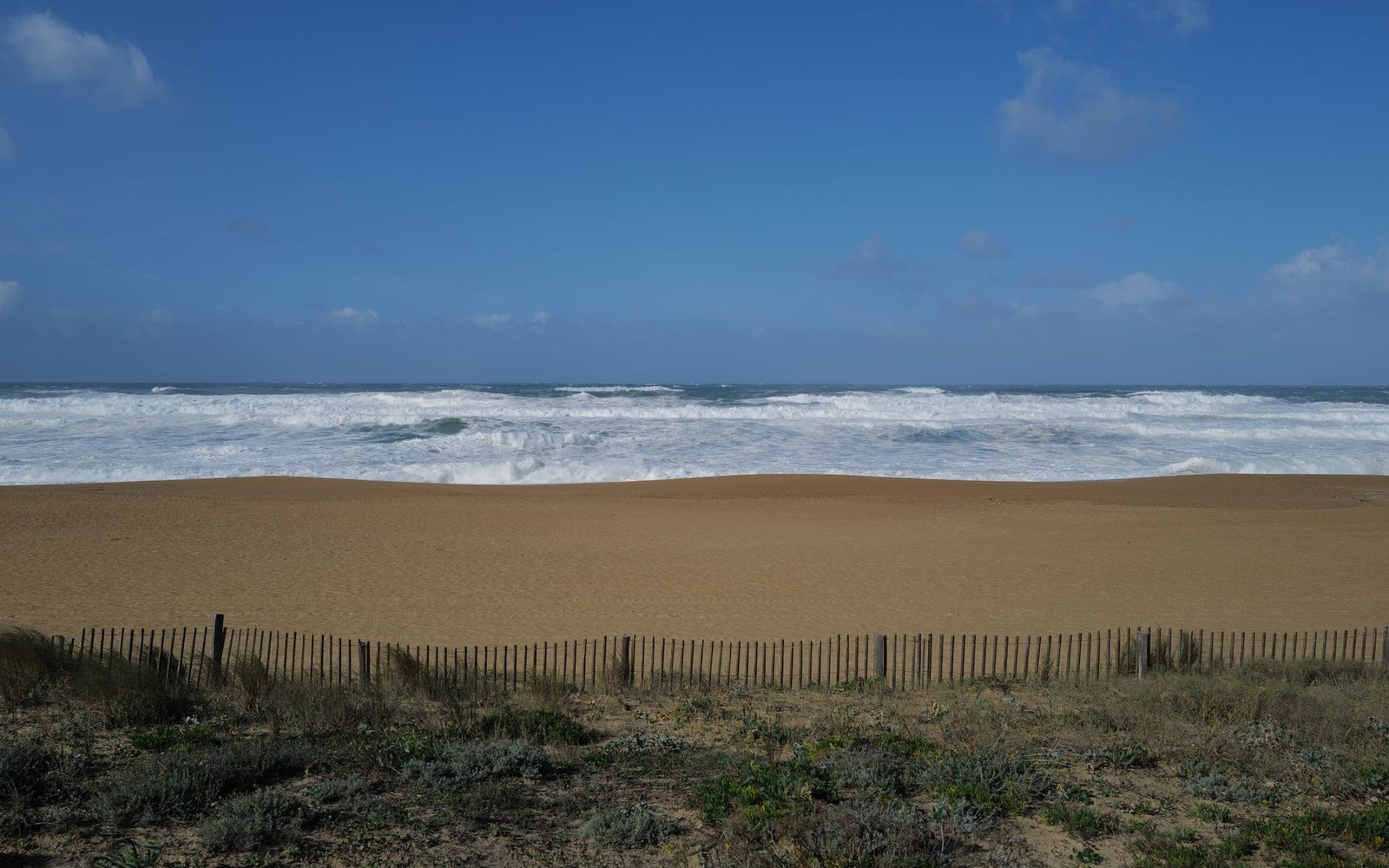

A wave scarp stands steeper than dry sand can hold, and then it does not. The toe is where the argument is.
Photo: Thierry Martine / Pexels · Photo: Ballybunion Golf Club - 10th hole · Wikimedia Commons
Brush thatching — laying cut branches, heather, or brushwood flat across bare sand and pinning it — is the second intervention. Its purpose is not aesthetic: dry brushwood reduces wind velocity at the sand surface, interrupting saltation (the skipping movement of individual sand grains) and allowing the surface to stabilise enough for planting. Without this intermediate step, newly planted marram is exposed to full wind scour and fails to establish.
Marram replanting is the third stage, and Ammophila arenaria is planted in large bare-rooted tufts, pushed deep so the rhizome mass is below the loose surface layer. Spacing is typically close — under half a metre — because isolated plants do not create the interlocking root mat that binds sand. The R&A's course management notes advise that newly planted sections should remain fenced for at least two full growing seasons; premature reopening is the most common cause of repeat failures at the same site.
The sequence is not complicated, but it is strictly ordered. Replanting before thatching fails. Thatching before fencing fails. Every recorded course-level blowout that required substantial dune reconstruction — on the Connacht coast and in County Clare — followed a period in which the early indicators were not acted on when foot-worn grass was still the only symptom. That is the intervention window: narrow, grassy, and easy to miss.