Dry, Poor, and Left Alone
Fescue wants to be dry and unfed; Poa annua wants water and takes over the moment it gets either. An argument for what links greenkeeping actually is — the disciplined refusal of generosity — with the agronomic record behind it.
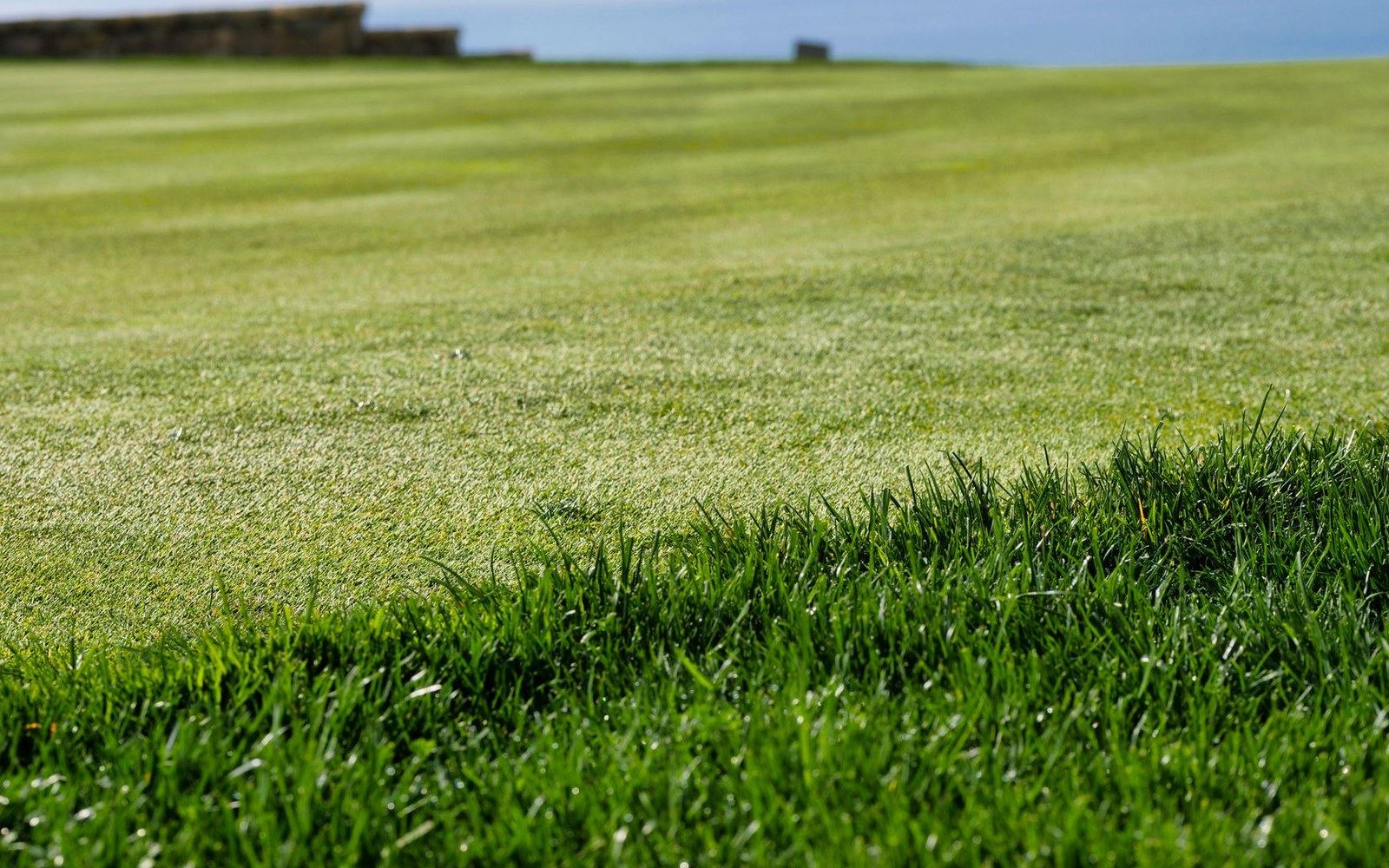
Two swards, one watering can between them.
Photo: Kindel Media / Pexels
What fescue actually needs is what greenkeepers find hardest to provide: nothing.
The Agronomic Logic of Refusal
Fine fescue — Festuca rubra and its subspecies — evolved on thin coastal soils where nutrients are scarce, rainfall drains fast through sand, and no gardener ever arrived with a fertiliser spreader. It produces tight, wiry leaf blades, grows slowly, and roots deeply enough to find moisture when the surface is dry. It is, agronomically speaking, a plant that has learned to get by. That adaptation is precisely what produces the firm, fast turf that defines a well-kept Irish links: the ball skips and releases, the ground plays as a third dimension, and the surface requires almost nothing to remain in that condition — except to be left alone.
Poa annua, annual meadow grass, did not evolve on dunes. It evolved as a weed of cultivated ground: disturbed, watered, fertilised soil. Its seeds germinate year-round, its shallow roots colonise the upper centimetres of turf where irrigation keeps moisture available, and it outcompetes fescue the moment conditions shift in its favour. That shift is not dramatic. A single wet autumn following an over-irrigated summer, a light dressing of nitrogen applied to push growth through a slow spring, a few weeks of daily watering to protect greens during a dry July — any of these tilts the balance. Poa takes the opening and the fescue retreats.
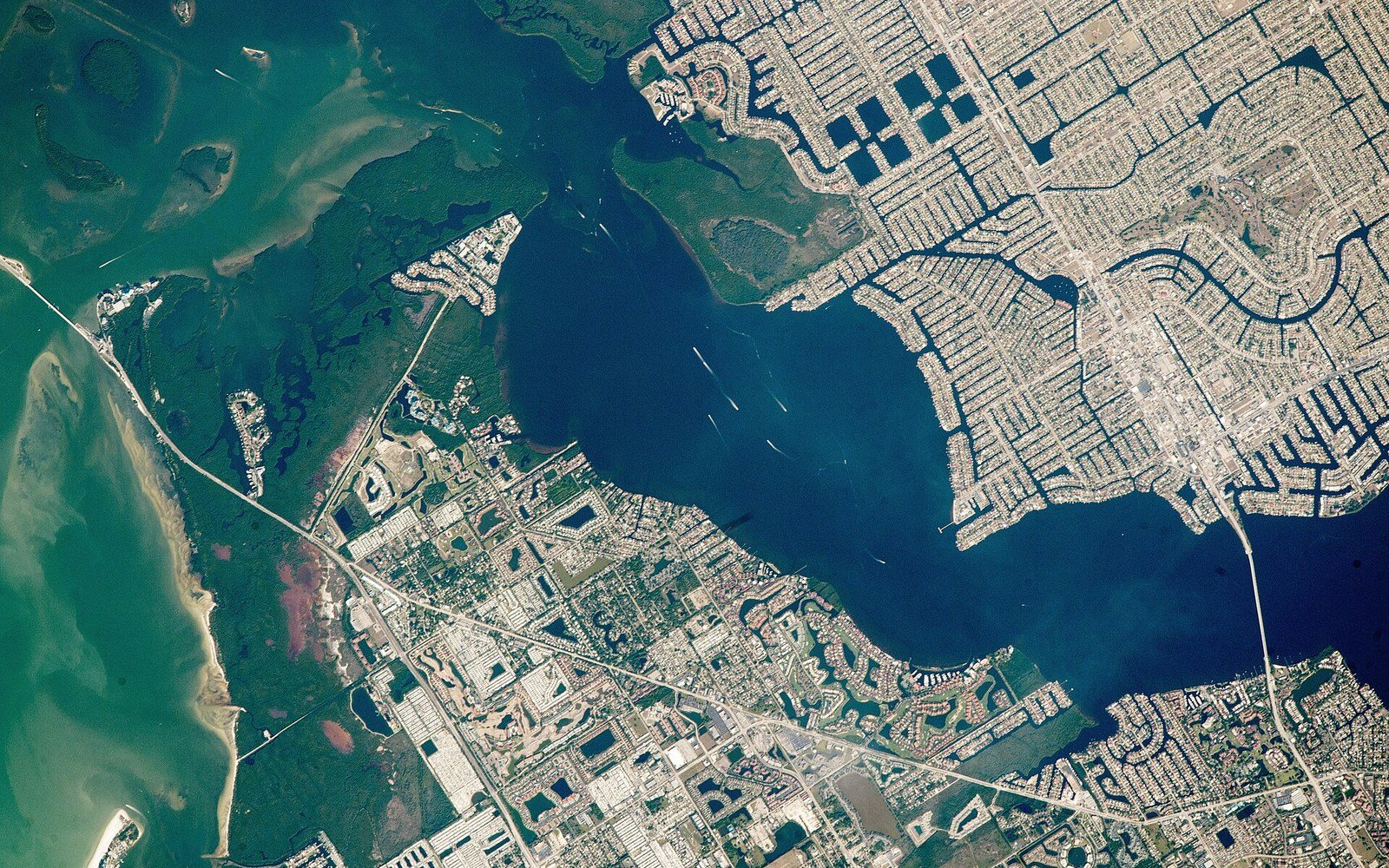
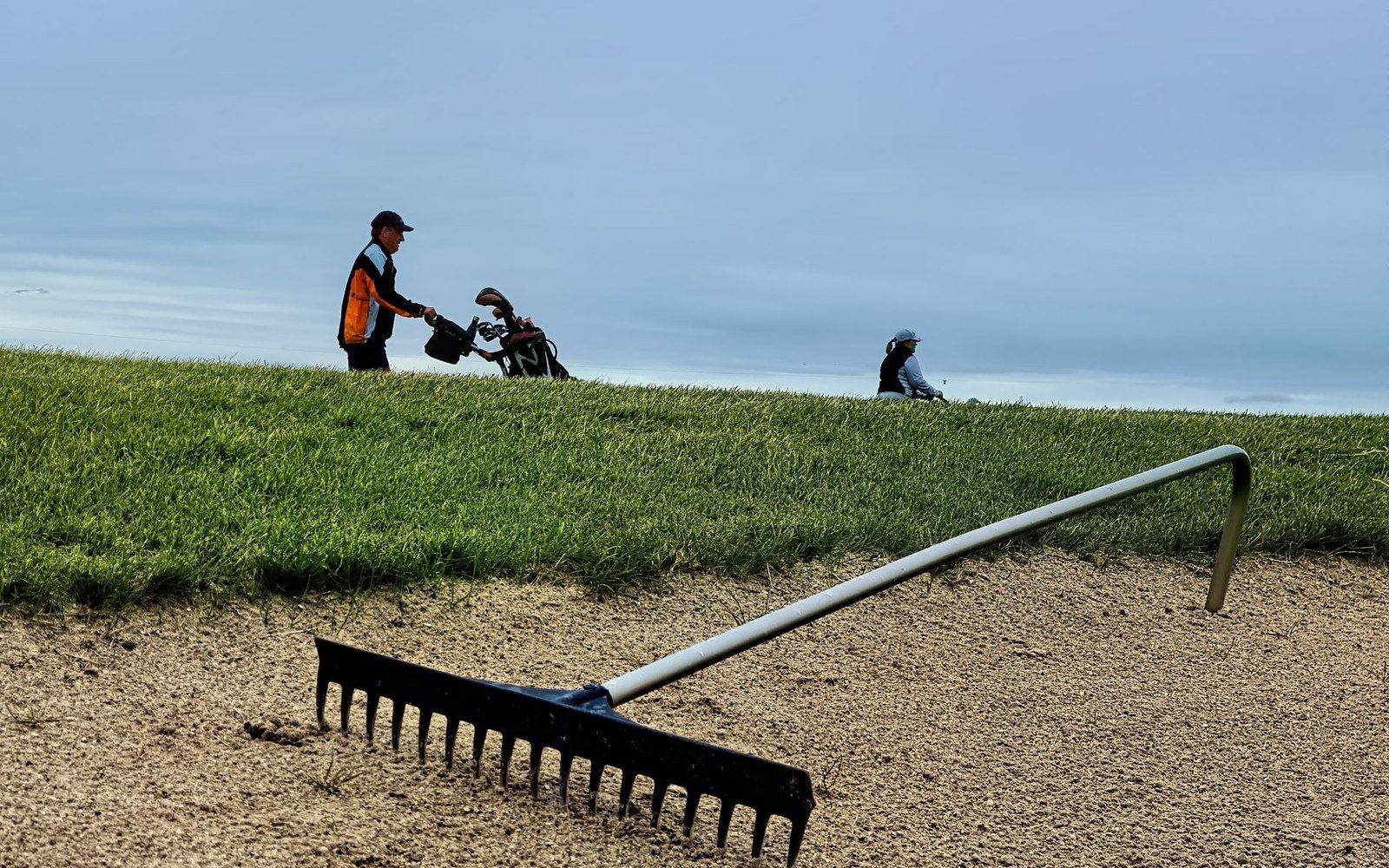
A gap in the ridge that began as a footpath. Turf cut, stacked and pinned by hand: a bunker face is rebuilt rather than repaired.
Photo: ISS047-E-84351 Cape Coral, Florida · Wikimedia Commons · Photo: Martin Magnemyr / Pexels
This is why the phrase most often heard from experienced links agronomists is not about what to apply, but about what to withhold. Research published through turfgrass science programmes confirms what generations of Irish greenkeepers established by observation: reduced irrigation, low nitrogen input, and infrequent cutting all favour fine fescue over Poa annua. The mechanism is simple. Stress the sward and Poa — the opportunist — suffers most. Leave the soil dry and poor, and fescue, which evolved for exactly those conditions, holds its own.
Why Generosity Is the Enemy
The practical difficulty is that every instinct in commercial greenkeeping runs the other way. Visitors expect green, they expect consistency, they expect the surface to look cared for in the horticultural sense. A brown-tipped fescue sward in August looks neglected to anyone trained on parkland courses. The clubs that have protected their fescue — Ballybunion, Lahinch, Royal County Down — have done so partly through agronomic discipline and partly through the authority that comes with a long championship record: the course's reputation gives the greenkeeper room to say no to water.
The R&A's Golf Course 2030 sustainability framework, published to set targets for water use and chemical reduction at affiliated clubs, reinforces the agronomic argument with an institutional one. Reducing irrigation is not only ecologically responsible on a coastline where water abstraction affects dune hydrology; it is, on a links, the correct playing-surface management. The two imperatives coincide. Soil-moisture probes, which give greenkeepers real-time water-content readings rather than relying on visual assessment, have made it easier to resist the reflex of irrigation — to hold off watering even when the surface looks dry, because the probe shows the root zone is not.
The R&A's own water-use guidance documents the target reduction in applied water across affiliated courses, and the logic holds most cleanly on a links: the course was built on free-draining sand, designed without irrigation in mind, and the turf it carries never required a tap. What it required was the discipline not to impose one. Dry, poor, and left alone is not a description of neglect. On a links, it is the specification.