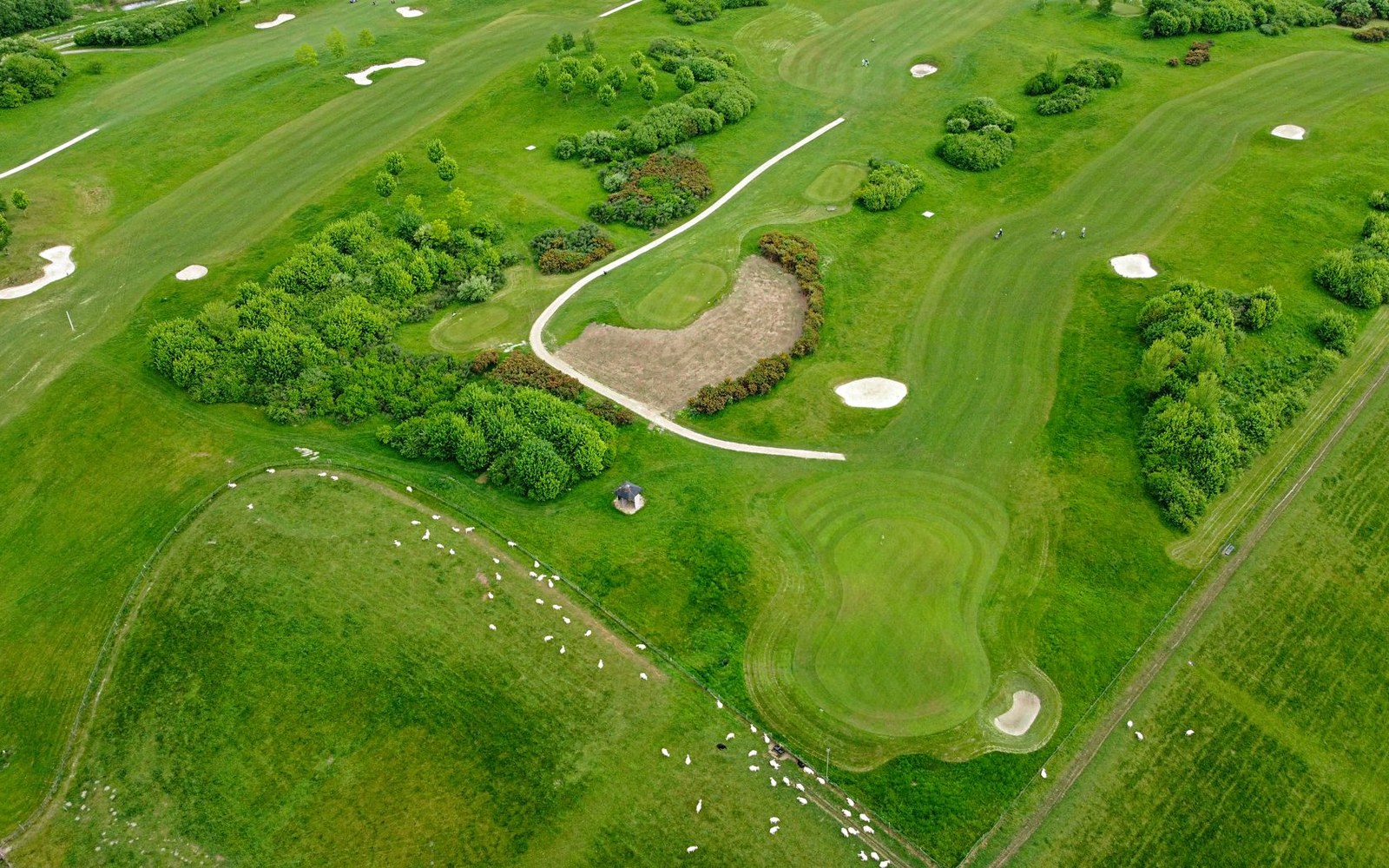
Martin Hawtree's Brief at Portrush: Two New Holes Into Dunes Nobody Had Played Over
The R&A required two new holes at Portrush to bring The Open back; Hawtree's 7th and 8th used dune ground the club had never routed through. The piece covers the design brief, the construction sequence, and how the new holes were received by the 2019 field.

Dunes the club had never routed through.
Photo: Royal Portrush Golf Club 5th hole · Wikimedia Commons
The R&A's condition for returning The Open to Northern Ireland was simple and non-negotiable: Dunluce needed two new holes on ground the club had never used.
The Brief and the Ground
Harry Colt's 1932 routing of the Dunluce Links had always skirted a stretch of severe, rumpled dune ground on the club's northern boundary. The land was there; it had simply never been incorporated. When the R&A determined that restoring The Open to Royal Portrush required a course capable of handling a modern championship field, the solution lay partly in distance and partly in routing. The old 17th and 18th — decent holes, but a weak finish for a major — were retired from the championship course. In their place, Martin Ebert was commissioned to build a new 7th and 8th through the untouched dune corridor to the north.
Hawtree came to the project with the most relevant possible preparation. His family firm had worked on Dunluce across several decades; he understood the sand topography intimately. The new holes required no invented drama — the dunes supplied it. The commission was to find a routing that used the natural ridgelines honestly, maintained the ground-game character Colt had established across the rest of the layout, and delivered holes that would function under Open conditions without requiring artificial severity.

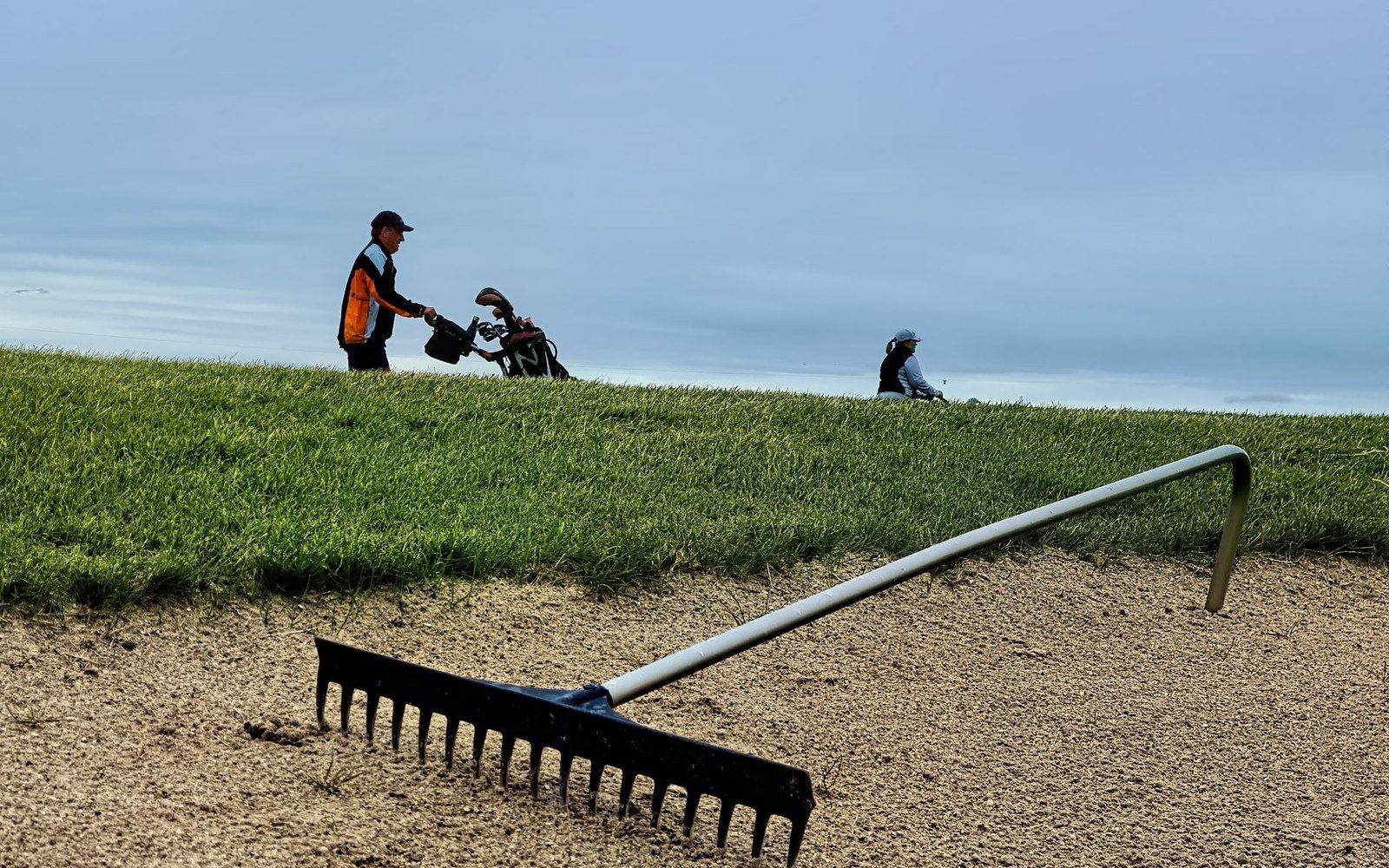
Shaping, moved earth, and a match in mind. Turf cut, stacked and pinned by hand: a bunker face is rebuilt rather than repaired.
Photo: Lucie Liz / Pexels · Photo: Martin Magnemyr / Pexels
Construction Sequence
Ground was broken in 2017, with completion required in sufficient time for the course to settle and be played in competitive conditions before the 2019 championship. The dune ground presented predictable challenges: stabilising disturbed sand, establishing fescue on slopes where exposed sand would otherwise sheet in wind, and tying drainage into an existing system not designed for this corridor.
The new 7th — playing from an elevated tee across a dune valley — asks the field to carry broken terrain and commit to a line that the dune ridges either reward or punish. The 8th returns through a narrowing channel, where the fairway is contoured rather than flat, and approach angles are dictated by the natural fall of the land rather than by earthmoving. Both holes demanded that Ammophila arenaria, marram grass, be planted and fenced on disturbed faces to arrest any dune blowout before the turf could establish. Geological Survey of Northern Ireland records indicate that this section of the Antrim coast is not among the most acutely eroding stretches of the Irish Atlantic seaboard, but freshly disturbed dune faces remain vulnerable until the rhizome network knits the sand together.
The retired holes — the old 17th and 18th — were incorporated into a reconfigured Valley Course, preserving their architectural material while removing them from the championship sequence. The transition was managed without closing the club, a logistical constraint that shaped the construction phasing.
The 2019 Reception
When the field played the new holes in competition for the first time at The Open in 2019, the reception from players and observers was broadly affirmative. The 7th played as a genuine risk-reward hole at tour distances, with the tee shot requiring a clear decision about which side of the fairway to favour. The 8th, shorter and more precise, provided a contrasting test without redundancy. Neither hole was criticised as an insertion — which is the most demanding standard a new hole on a historic layout can meet.
The R&A's Championship Committee records for the 2019 Open confirm the field played the full Dunluce layout across four rounds without modification to the new holes, and the scoring distribution across the 7th and 8th reflected design intent: difficult enough to matter, not so severe as to distort the overall card.
What Hawtree produced was not a revision of Colt but an extension that honoured the same instincts: use what the ground offers, build as little as possible, and trust the player to read the terrain.